Engineered for high efficiency, severe-duty environments, and robust mounting stability across global industrial applications.
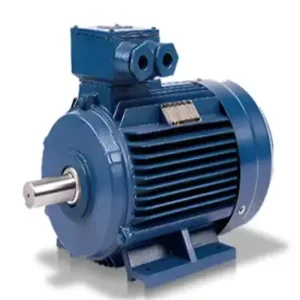
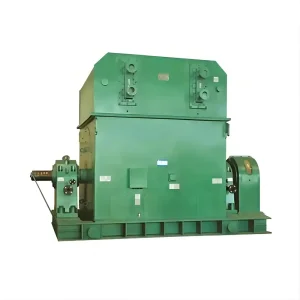
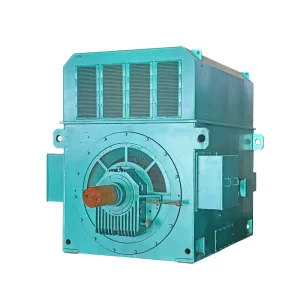
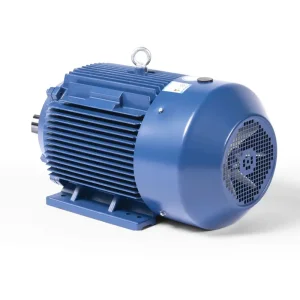
Understanding mechanical dynamics, torque transmission, and alignment tolerances for severe industrial environments.
In heavy industrial applications, the mechanical connection between the electric motor and the driven load is the most critical stress point. The motor shaft must withstand massive torsional fatigue, bending moments, and radial forces. China's top-tier manufacturers utilize high-tensile structural carbon steels like C45 or medium carbon alloy steels like 40Cr, thermal-treated and stress-relieved to prevent fatigue cracks over decades of operation.
Keyways and shaft extensions conform strictly to international specifications such as DIN 6885-1. Precision balance is achieved through dynamic balancing processes conforming to ISO 1940 criteria, ensuring a vibration severity grade of G1.0 or G2.5. By implementing these measures, motors can successfully operate under extreme shock loads without suffering shaft deformation or coupling failures.
"To guarantee an L10 bearing life exceeding 100,000 hours in continuous pump installations, motor engineers must minimize axial play and calculate precise radial load parameters at the output shaft end."
Choosing the correct mounting style is essential for integrating the motor into the mechanical chassis. The standard configurations defined by IEC 60034-7 include:
From raw material processing to state-of-the-art testing facilities, explore the factors driving global motor procurement.
China's steel manufacturing sector supplies top-quality cold-rolled non-oriented silicon steel sheets (e.g., 50CS1300 and 35CS300 grades). These laminations exhibit extremely low core-loss values, permitting factories to cost-effectively build IE4 and IE5 efficiency motors while retaining compact frame sizes.
Advanced Chinese motor plants use automated precision coil winding machines and double-impregnation systems. Utilizing premium Class F (155°C) and Class H (180°C) enameled copper wires, stators achieve high dielectric strength, resisting voltage spikes caused by VFD operations.
Vacuum Pressure Impregnation (VPI) equipment is standard in major Chinese manufacturing hubs. Stators are placed in pressure chambers, ensuring epoxy resin fills all micro-voids, providing protection against moisture, conductive dust, and harsh atmospheres.
Ensuring compliance with global quality bodies and validating electric motor performance under load.
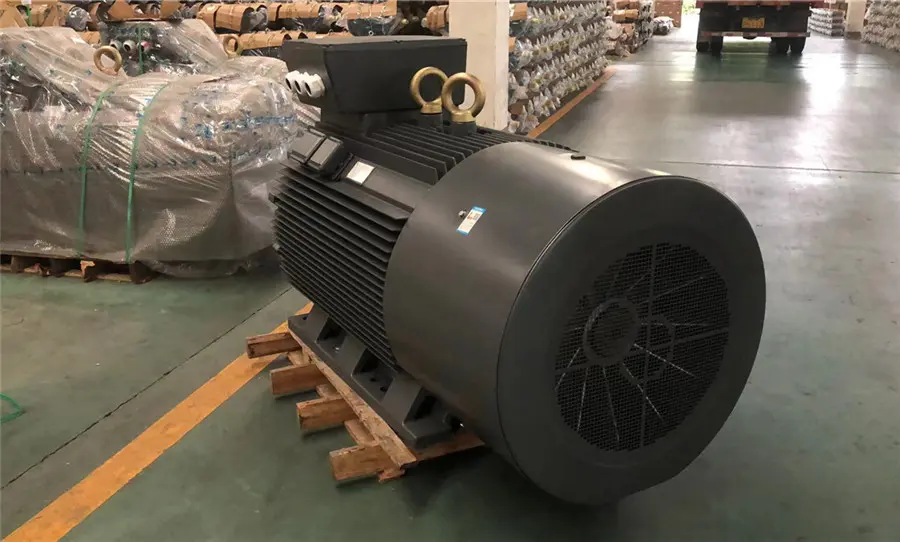
Reliable manufacturers execute rigorous Factory Acceptance Testing (FAT) prior to shipment. When purchasing motors from China, global procurement teams must verify that products undergo rigorous tests:
How specialized shaft and mounting configurations satisfy heavy engineering challenges around the globe.
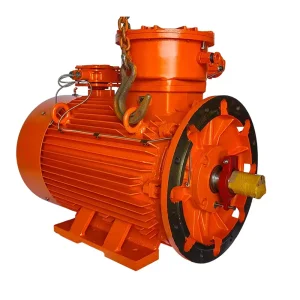
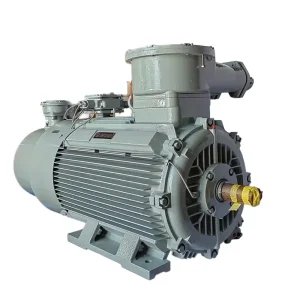
Petrochemical installations require motors that prevent gas ignition. Utilizing YBK3 flameproof and YFB3/YFB4 dust explosion-proof designs with IP55 or IP66 enclosures, these motors prevent sparks from escaping. Mounting configurations like IM B35 allow them to drive high-capacity gas compressors and heavy-duty slurry pumps securely.
Rolling mill drives encounter intense vibrations and sudden load fluctuations. High-voltage slip ring motors, such as the YRKK and YRKS series, allow external resistance to be added to the rotor circuit, generating high starting torque with minimal grid current. They feature custom forged shafts made of 42CrMo steel to resist shearing forces.
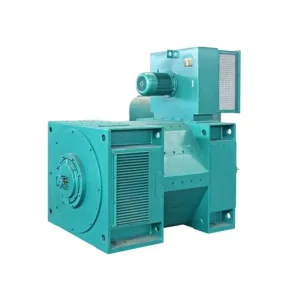
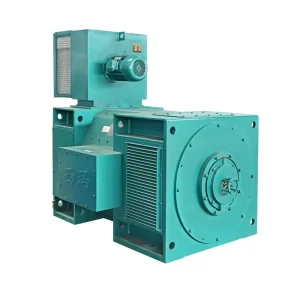
Underground mines demand high reliability. Conveyors and crushers use large-scale DC motors (e.g., Z series) and synchronous motors (e.g., TDMK series) coupled with soft starters to avoid mechanical wear on gearboxes. Standardized mounting feet provide rigidity, and custom dust labyrinth seals keep contaminants out of the bearing chamber.
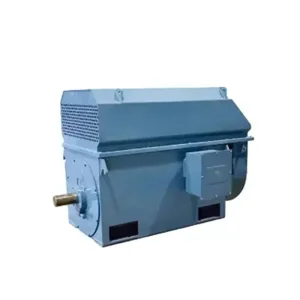
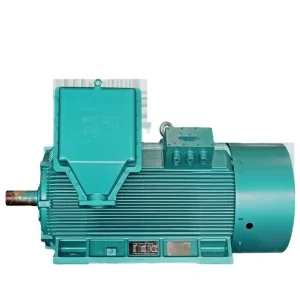
Pumping stations use vertical configuration motors (e.g., IM V1) designed to withstand axial load components. High-voltage asynchronous induction motors (e.g., YKK/YXKK) drive large water pumps, employing water-to-air heat exchangers (IC81W) or air-to-air cooling (IC611) to maintain optimal temperature levels.
Developing trends in global industrial electric drive technology.
Regulatory pressures to reduce industrial energy consumption have pushed the market toward higher efficiency standards. The transition from IE3 and IE4 to IE5 represents a major engineering step. Top manufacturers achieve IE5 performance using advanced rotor designs, which reduce rotor slip losses. The resulting lower operating temperatures extend insulation life.
Operating motors via Variable Frequency Drives (VFDs) can introduce high-frequency voltage harmonics, causing electrical discharge machining (EDM) currents to flow through the bearings. Left unaddressed, this leads to premature bearing failure. Factories mitigate this by installing insulated non-drive-end (NDE) bearings, grounding brushes, and reinforced insulation systems.
Modern facilities are moving away from reactive maintenance. Integrating IoT sensors directly into the motor frame allows monitoring of real-time variables:
A leading manufacturer and service supplier of large, medium, high, and low-voltage electric motors in China.
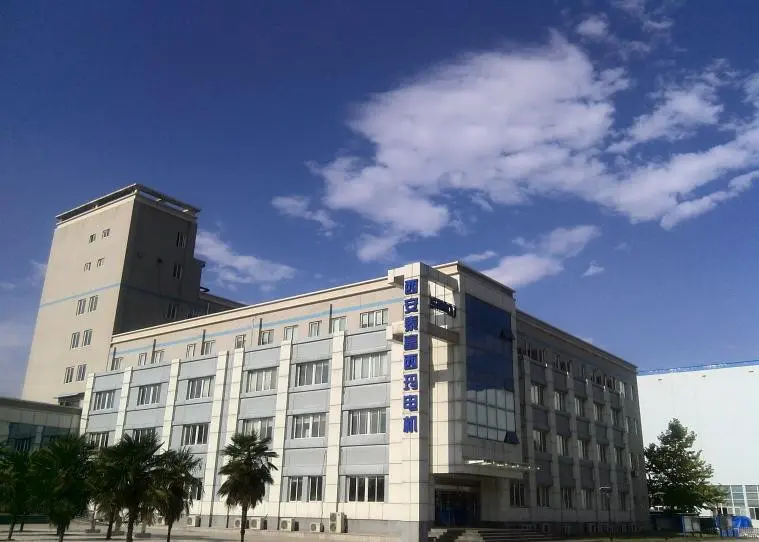
Xi’an Lite SIMO Motor Co., Ltd. is a prominent enterprise specializing in the manufacturing of large/medium-sized, high/low voltage AC motors, DC motors, synchronous motors, and explosion-proof motors within the Chinese mechanical industry. SIMO functions as a comprehensive manufacturing and service supplier, handling motor design, mechanical processing, mold making, assembly, and testing.
The company ranks among the top players in China’s motor industry as to its scale of production. It features a registered capital of 21.5 million RMB, three manufacturing factories, one subsidiary factory, fixed assets of 380 million RMB, and more than 1,172 sets of advanced manufacturing and testing equipment.
With over 1,200 employees, the company relies on 260+ technical engineers, including 21 senior engineers and 15 expert engineers, to drive continuous product development.
SIMO Motor established and led by government steering to initiate domestic motor production.
Relocated to the new production plant in Xi'an city, establishing a base for growth.
Renamed to Xi'an Motor Factory after a series of acquisitions and integrations.
Reformed into a limited liability company, introducing modern corporate systems.
SIMO Motor Group formally established, incorporating 14 subsidiaries.
Moved to a modern high-tech plant, optimizing production flow.
Changed name to Tech Full Simo Motor, expanding presence in global markets.
Continuing development as a leading motor manufacturer globally.
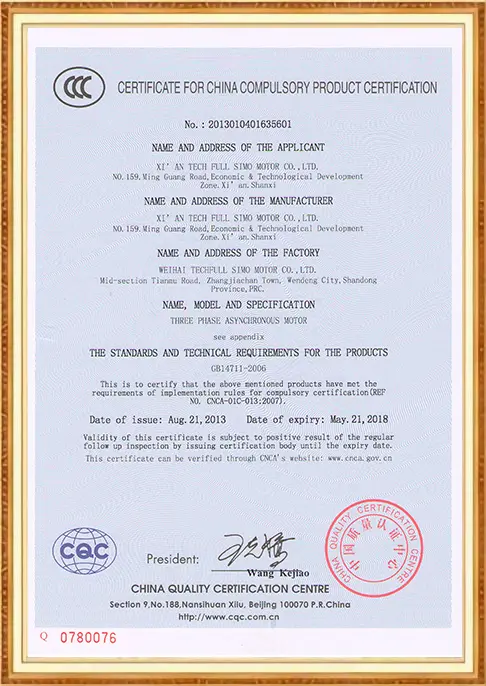
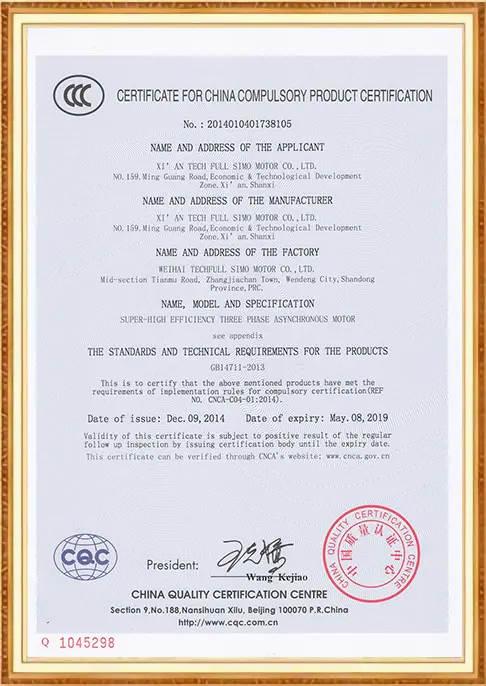
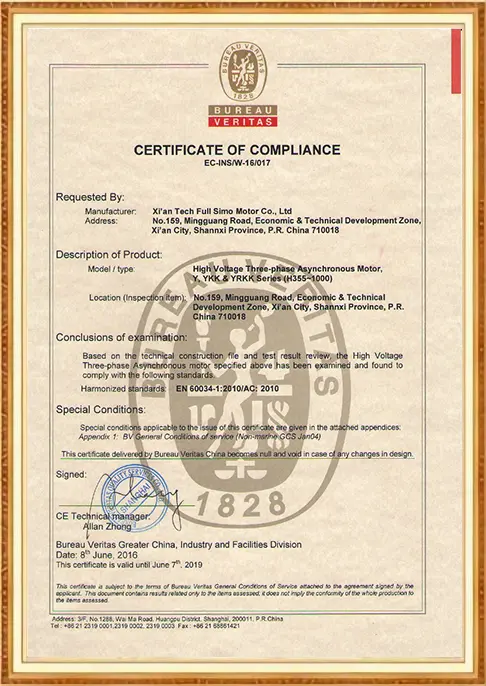
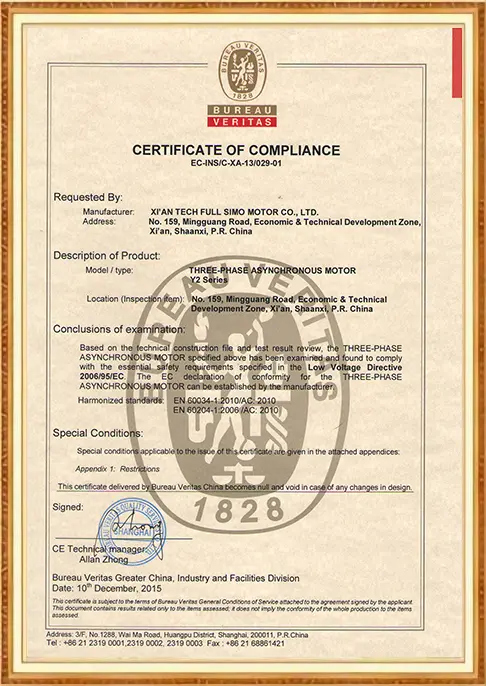
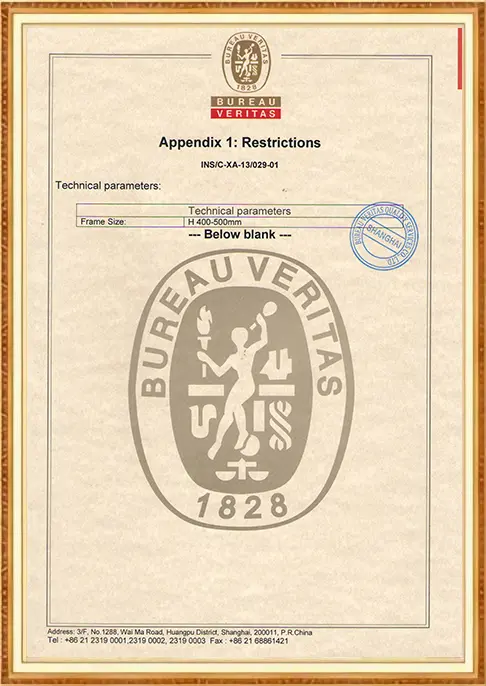
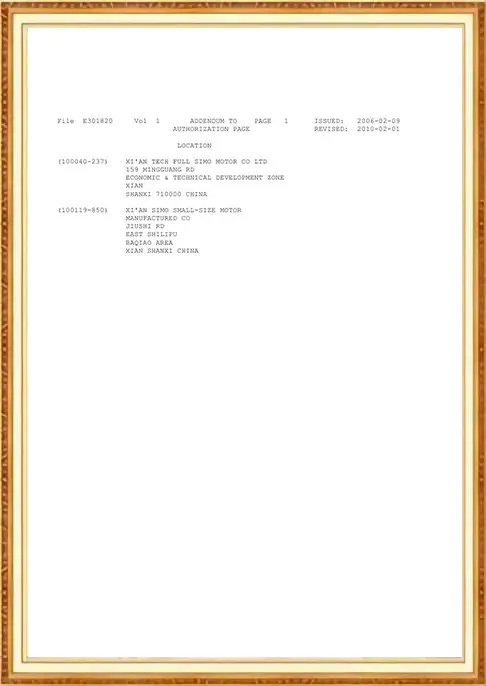
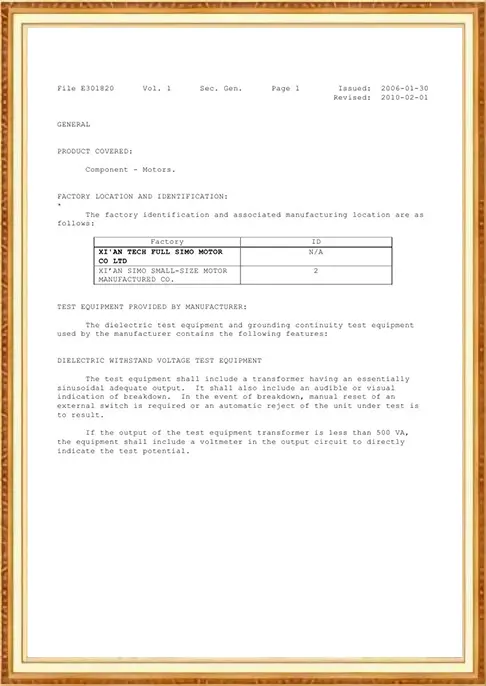
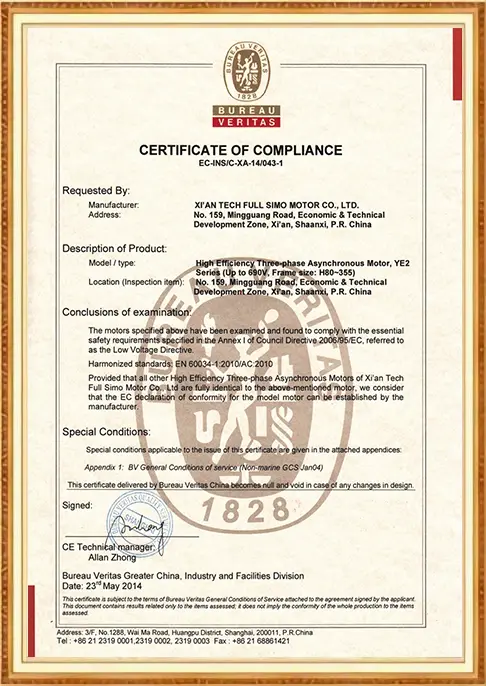
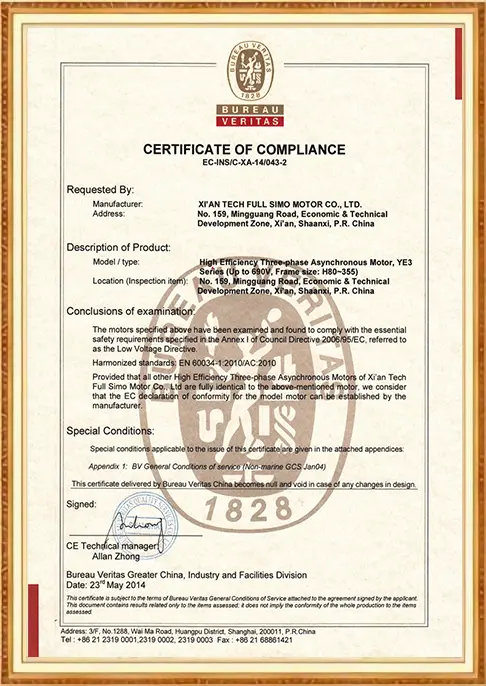
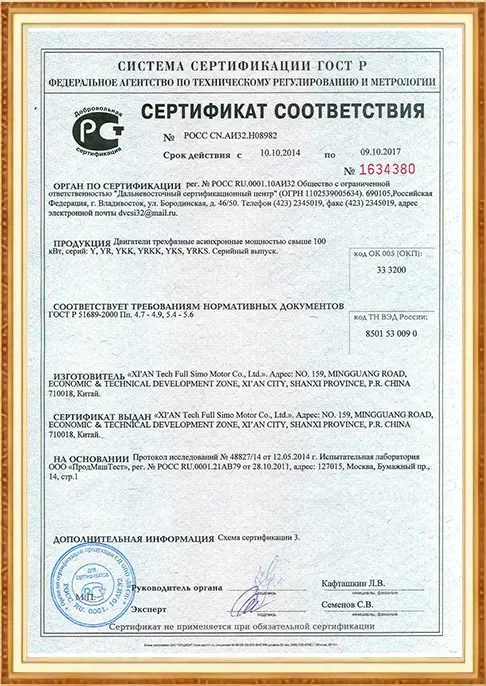
Simo Motor has obtained ISO9001 Quality System Certification, European Union CE, United States UL, Russian GOST, and Chinese CCC certifications, supporting exports to global markets.
Addressing the technical concerns of industrial plant operators, design institutes, and procurement managers.
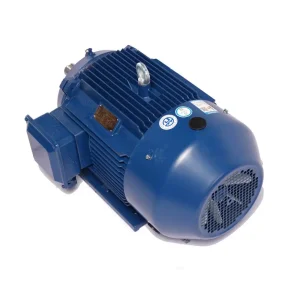
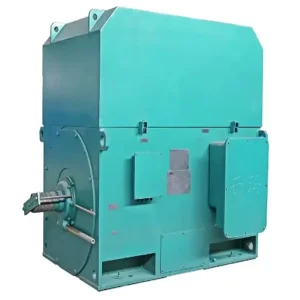
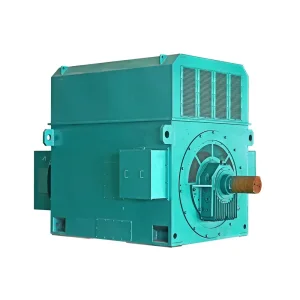
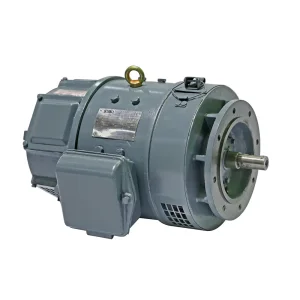
Heavy-duty, high-voltage induction and DC motors designed to meet global industrial standards.
 Lite Simo