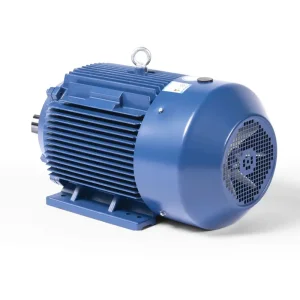
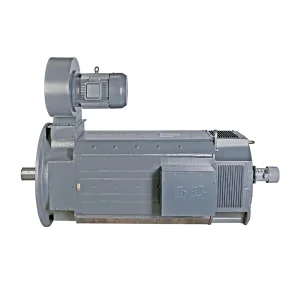
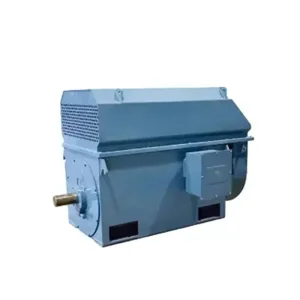
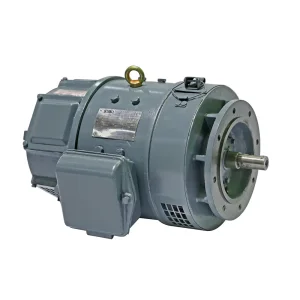
Engineered for extreme performance, energy efficiency, and operational reliability across demanding industrial sectors.
An authoritative analysis on why liquid-jacketed and direct-rotor cooling are replacing air-forced convection systems in high-power density applications.
In modern industrial drives, thermal management is the critical limiting factor determining overall system reliability, power density, and operational lifespan. Conventional air-cooled induction and synchronous motors rely on heat transfer mechanisms that are inherently bounded by the low specific heat capacity of air. When electric machinery operates in confined spaces, hazardous environments, or under continuous duty cycles at maximum load, air cooling fails to maintain winding temperatures within optimal limits.
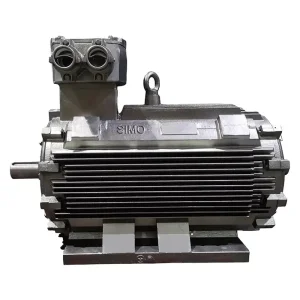
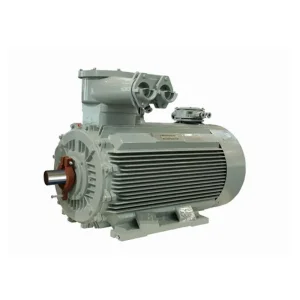
This is where Liquid Cooled Electric Motors offer a transformative thermal solution. By utilizing liquid cooling jackets—where a mixture of water and glycol, or synthetic oil, is circulated through precision-engineered internal channels surrounding the stator core—the rate of heat extraction is increased up to 10-fold compared to traditional fan-cooled methods. The resulting temperature stability prevents insulation degradation, prevents hot-spot formation, and enables motor frames to be scaled down significantly while matching or exceeding the power rating of much larger air-cooled alternatives.
By routing liquid coolant directly through structural jacket profiles, thermal gradients across winding slots are minimized, allowing the motor to run continuously at ultra-premium efficiencies without heat soaking.
Liquid-cooled architectures reduce the frame footprint by up to 50% for equivalent kilowatt outputs, freeing up critical installation space in heavy machinery, mining drives, and marine vessels.
Because there is no reliance on external airflow, these motors are completely sealed (up to IP66 or IP67), making them impervious to abrasive dust, corrosive chemical vapors, and explosive mine gases.
Xi’an Lite SIMO Motor Co., Ltd is an electric motor manufacturing powerhouse and a key enterprise specializing in the design, engineering, and mass production of large, medium, and small-sized, high and low voltage AC/DC motors, synchronous machines, and explosion-proof solutions. Serving as a comprehensive industrial partner, SIMO manages everything under one roof: from initial magnetic circuit simulation and structural design to mold fabrication, machining, complex assembly, and rigorous load testing.
Ranking consistently among the top performers in China’s industrial motor manufacturing sector, SIMO's manufacturing scale, engineering depth, and technological innovations have maintained a fast-growing development trajectory. Our commitment to incorporating direct-fluid thermal management platforms has positioned us as a premier supplier of custom liquid-cooled solutions globally.
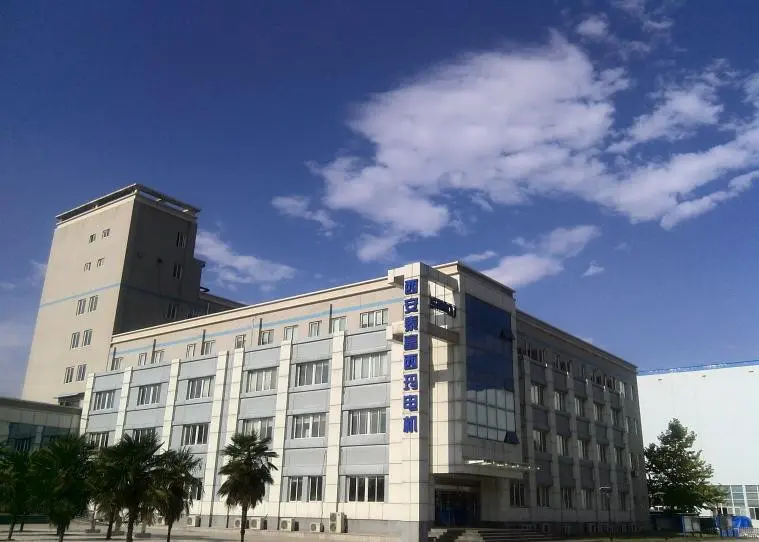
Established in 1955, SIMO Motor has accumulated more than six decades of deep domain knowledge, adapting from a state-owned foundational factory to a modernized, high-tech industrial enterprise group. Today, the corporation has a registered capital of 21.5 million RMB, maintains 3 large-scale manufacturing complexes, and houses over 1,172 sets of state-of-the-art production machinery.
SIMO Motor established as a government-led engineering initiative.
Officially restructured to Xi'an Motor Factory after strategic integrations.
Reformed into a highly efficient limited liability company.
Relocated to a massive, advanced high-tech production facility in Xi'an.
Driving the global industry forward with cutting-edge IE4/IE5 liquid cooled motor designs.
Why leading global enterprises partner with Chinese OEM factories for customized liquid-cooled high-voltage systems.
The global demand for high-efficiency, liquid-cooled industrial motors is shifting toward factories in China. This movement is not simply driven by cost optimization; rather, it is the result of China’s massive supply-chain consolidation, raw material dominance, and rapid engineering iteration cycles. Chinese manufacturers have established an end-to-end ecosystem that integrates raw silicon steel processing, high-grade copper winding drawing, rare-earth magnet sourcing, and advanced automated CNC machining inside localized industrial zones.
For custom liquid-cooled motors, precision is everything. Internal cooling channels require specialized casting and CNC milling to ensure zero leakage and optimal flow dynamics. Chinese manufacturers, particularly market leaders like Xi'an Lite SIMO, have invested heavily in automated CAD/CAM systems, advanced vacuum pressure impregnation (VPI) equipment, and multi-axis machining centers. This allows us to achieve incredibly tight tolerances and perform complex customization at a fraction of the lead time required by Western OEMs.
Furthermore, China’s access to high-performance permanent magnet materials (specifically Neodymium Iron Boron, or NdFeB) gives Chinese motor suppliers a distinct advantage in building ultra-high efficiency permanent magnet synchronous motors (PMSM) featuring liquid-jacket cooling. This ensures that the global procurement team receives a highly competitive product, conforming fully to international standards (IEC, NEMA) while benefiting from unmatched manufacturing agility.
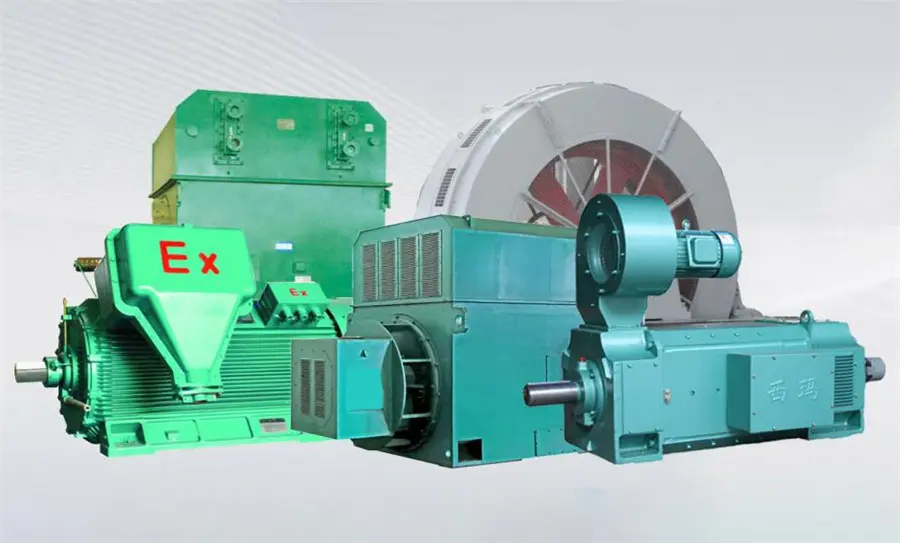
Covering a broad power range from 0.35 kW up to 25,000 kW across 34 major series.
SIMO's R&D division has systematically categorized our production systems into specialized modules to match diverse field requirements. Below are the core technical classifications engineered to operate in the most demanding conditions:
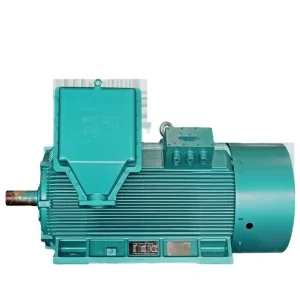
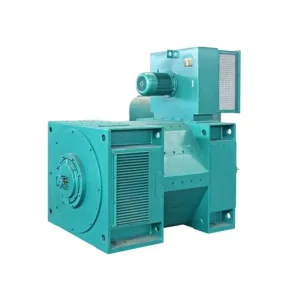
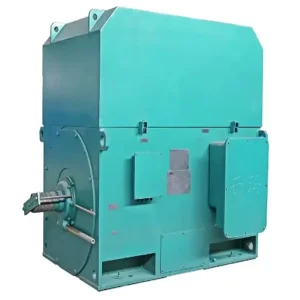
Engineered for continuous duty in heavy industries, including the YX, YXKK, and YXKS series. Designed to deliver high torque with optimized stator winding configurations, ensuring minimal electrical losses and maximum durability under fluctuating loads.
The YR, YRKK, and YRKS series are designed for applications requiring high starting torque and low starting current. Ideal for heavy-duty conveyors, mills, and crushers where start-up inertia is high.
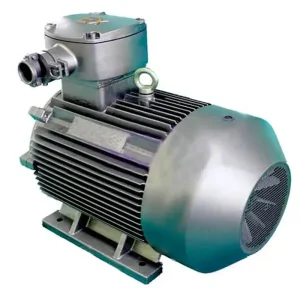
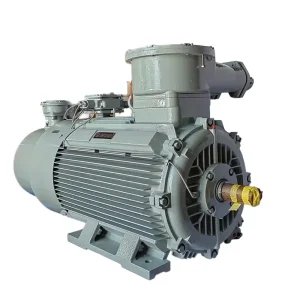
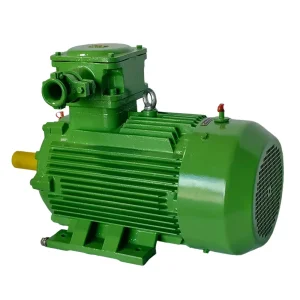
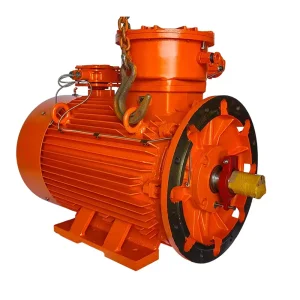
Covering the YBX3, YBX4, and YBX5 series, these explosion-proof motors are certified for hazardous zones, including oil refineries, chemical processing plants, and underground coal mining operations (YBK3 series).
Featuring the YVFE3, YVFE4, and YVFE5 series, designed to interface seamlessly with modern VFD drives. These systems deliver constant torque output even at low-speed operations, preventing thermal stress via integrated cooling systems.
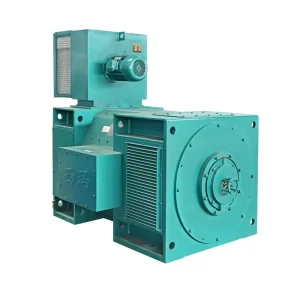
Including the T, TD, TK, and TDMK series synchronous motors, large-scale TFW synchronous generators, and heavy-duty industrial DC motors spanning the Z2, Z4, and Z series for high-torque industrial applications.
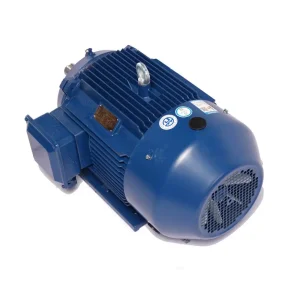
The state-of-the-art YE5 and IE5 series of three-phase asynchronous motors representing the pinnacle of energy conservation, reducing operational carbon footprint and energy expenditure significantly.
Key forces shaping the future of global powertrain engineering and motor design.
Three primary macro trends are accelerating the adoption of liquid-cooled motors across global industrial sectors: 1) The Net-Zero Carbon Mandate, which requires industries to adopt IE4 and IE5 efficiency standards; 2) High-Power Density Integration, driven by the electrification of heavy transport, mining equipment, and marine vessels where space is at a premium; and 3) Automated IoT Diagnostic Monitoring, where liquid cooling channels are integrated with temperature and flow sensors to enable predictive maintenance.
In standard motors, convective air heat transfer is poor. In contrast, SIMO’s custom liquid cooled motors use an array of inner jacket cooling channels. When a water-glycol coolant runs through these channels, it absorbs heat directly from the stator lamination stack. This allows us to keep the internal copper winding temperature well below the limit of the Class F or Class H insulation system, ensuring that the motor maintains maximum torque efficiency without thermal derating.
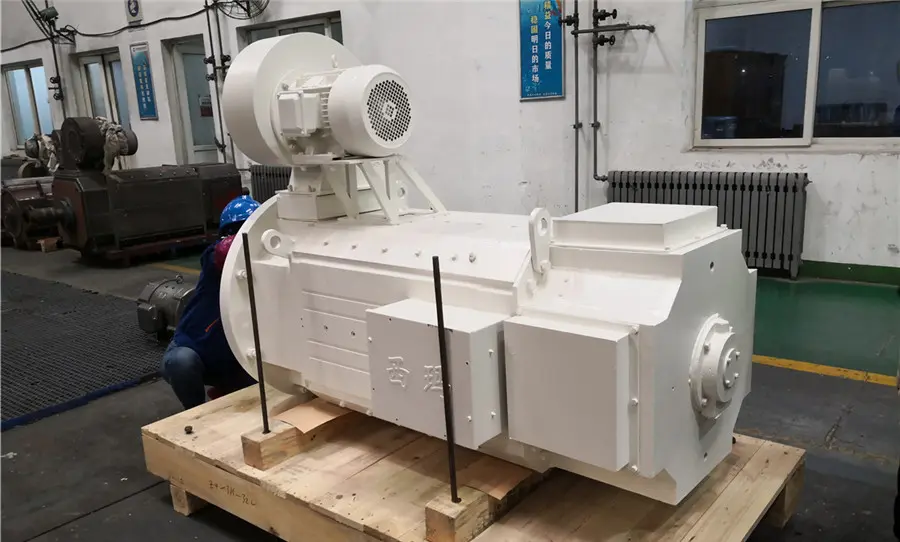
Ensuring compliance, reliability, and seamless logistics integration for international engineering projects.
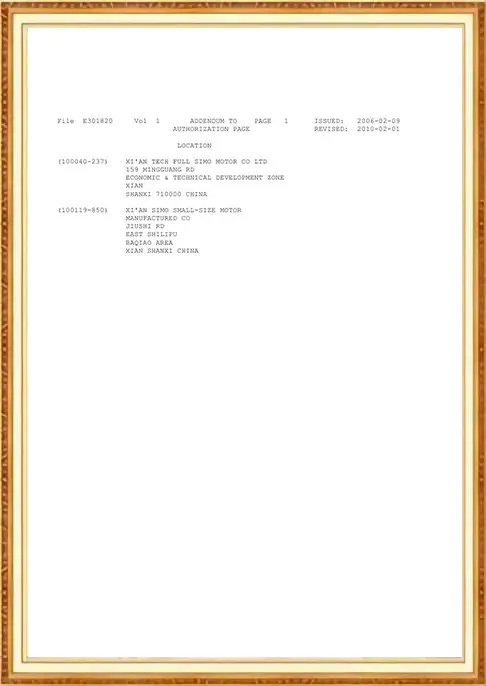
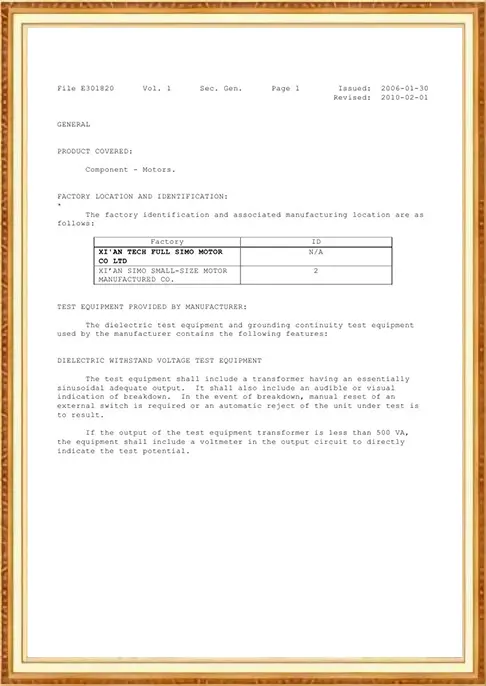
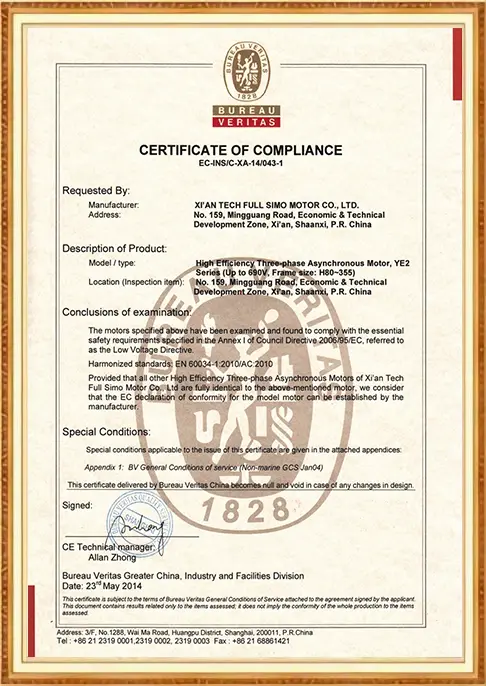
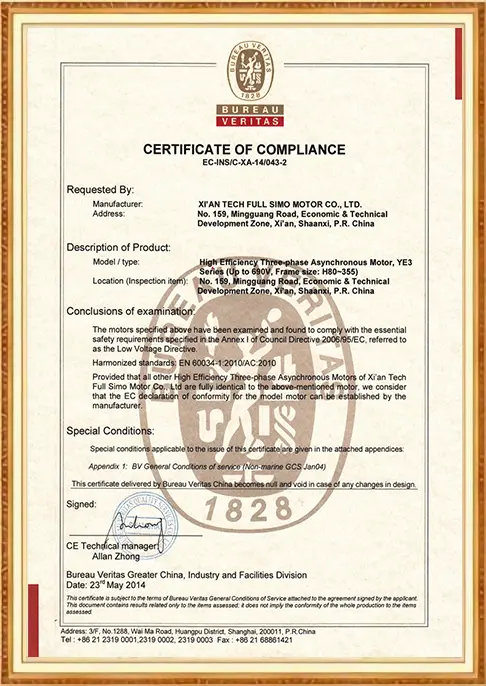
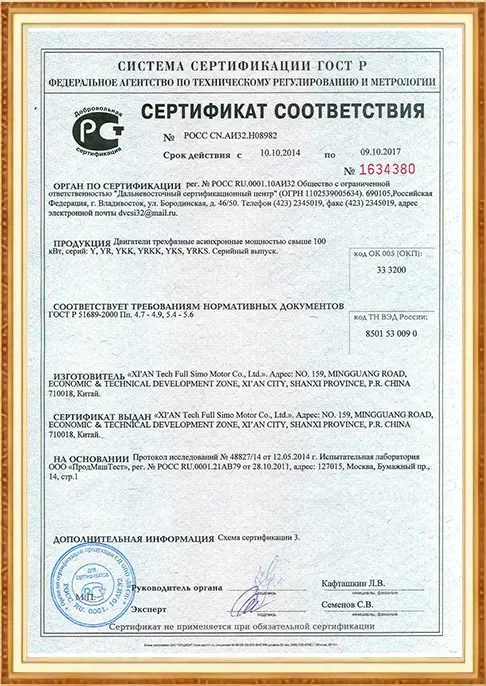
For multinational procurement managers, sourcing custom motors requires deep technical vetting and strict quality assurance. A primary concern is regulatory compliance. All SIMO electric motors undergo rigorous testing regimes to meet global industry benchmarks, including European Union CE certification, United States UL recognition, and Russian GOST standards, all underpinned by an ISO9001 Quality System. This ensures that the equipment can be integrated immediately into industrial systems in Europe, North America, and Central Asia.
Full documentation of laminations, bearings, winding wire, and casting materials for compliance auditing.
Comprehensive FAT protocols, including vibration analysis, dielectric testing, and thermal run verification.
Rotors are dynamically balanced to Grade G1 or G2.5 precision to prevent structural fatigue and bearing wear.
Recognized and approved by leading global inspection authorities.
Expert engineering answers addressing design challenges, performance benchmarks, and installation queries.
Water-jacket cooling (often called liquid-jacketed cooling) features coolant channels machined directly into the motor frame. The heat generated inside the stator laminations travels radially outward into the frame and is carried away by the circulating fluid. This design is highly robust, requires low maintenance, and is suitable for most industrial applications. Direct-winding cooling routes non-conductive oil or specialized fluids directly through hollow stator conductors or winding slots. While direct cooling provides the absolute highest rate of thermal extraction, it requires complex sealing assemblies and specialized filtration systems, making it more common in highly specialized motors rather than general industrial machinery.
According to the Arrhenius chemical rate equation, the lifetime of stator insulation is cut in half for every 10°C rise in operating temperature above its design limit. A motor running at elevated temperatures will quickly suffer insulation cracking, short circuits, and ground faults. By incorporating liquid cooling, SIMO motors can maintain stable winding temperatures even during high duty cycles. This thermal stability significantly extends the life expectancy of Class F and Class H insulation materials, protecting the capital investment of your enterprise.
The choice of coolant depends entirely on the operating environment. The most common coolant is a 50/50 mixture of water and industrial-grade ethylene glycol, which prevents freezing in low-temperature climates and provides corrosion protection for the internal cooling channels. For applications in extremely cold environments, or where water is prohibited, dielectric synthetic oils or silicone-based heat transfer fluids can be used. Our engineering department works closely with clients to specify the ideal fluid chemistry and flow rate for their application.
Yes. In fact, liquid-cooled motors are exceptionally well-suited for explosive atmospheres (such as YBX3, YBX4, and YBX5 zones). Because the motor is entirely enclosed and has no external fan to blow particulate matter or draw in explosive gases, it is easier to achieve strict ATEX and IECEx flameproof compliance. Furthermore, the liquid cooling jacket keeps the outer frame temperature well below the ignition temperature class limits (e.g., T4, T5, or T6) required in refineries and chemical storage spaces.
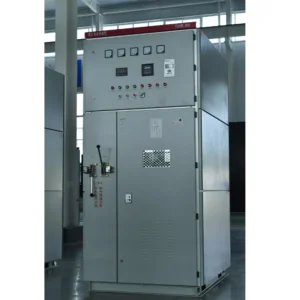
Maintenance of the cooling circuit is straightforward and aligns with standard industrial HVAC/chiller practices. The primary requirements include: regular monitoring of the coolant pH and concentration to prevent internal corrosion, periodic inspection of the pump assembly and fluid seals, and flushing the cooling channels every 2-3 years to remove any mineral scaling or biological growth. Standard flow sensors and temperature probes can be integrated into the control cabinet (such as our high-voltage soft-start systems) to automate fault detection.
Customized drive systems, control cabinets, and heavy duty industrial motors for diverse operational parameters.
 Lite Simo