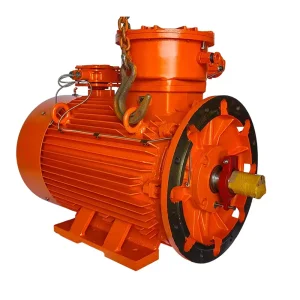
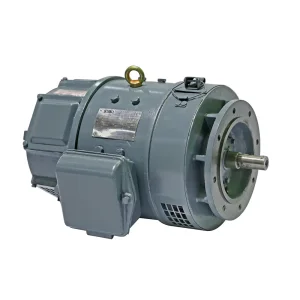
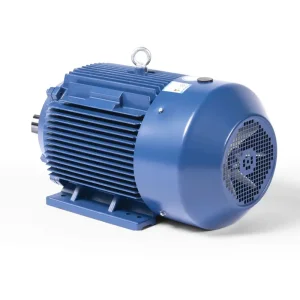
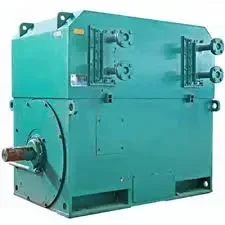
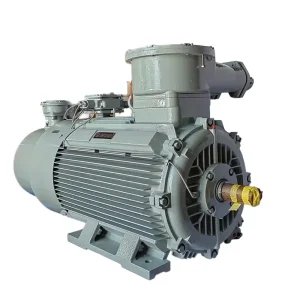
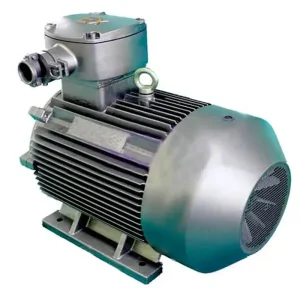
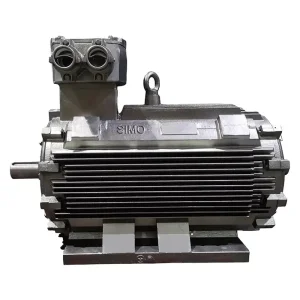
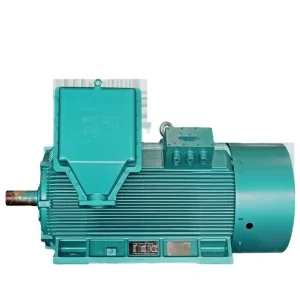
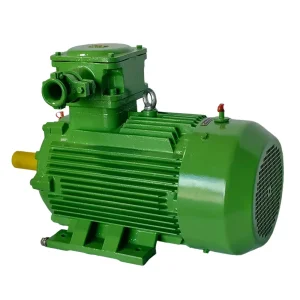
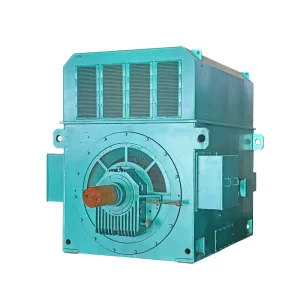
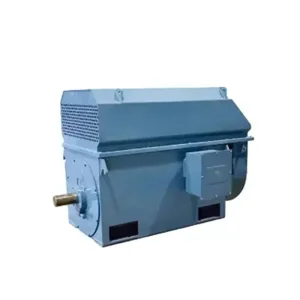
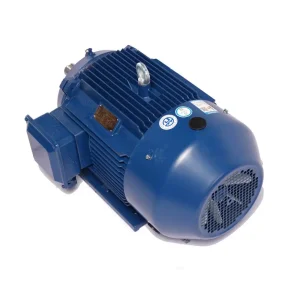
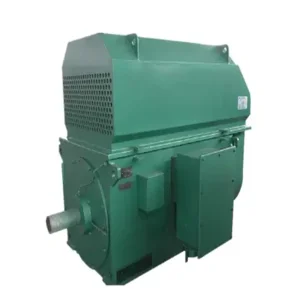
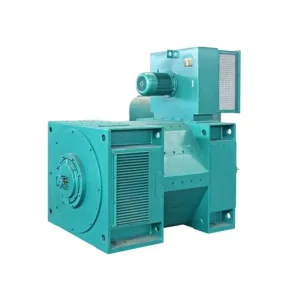
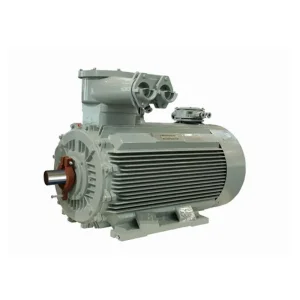
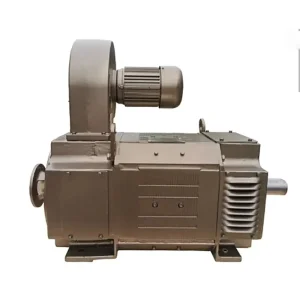
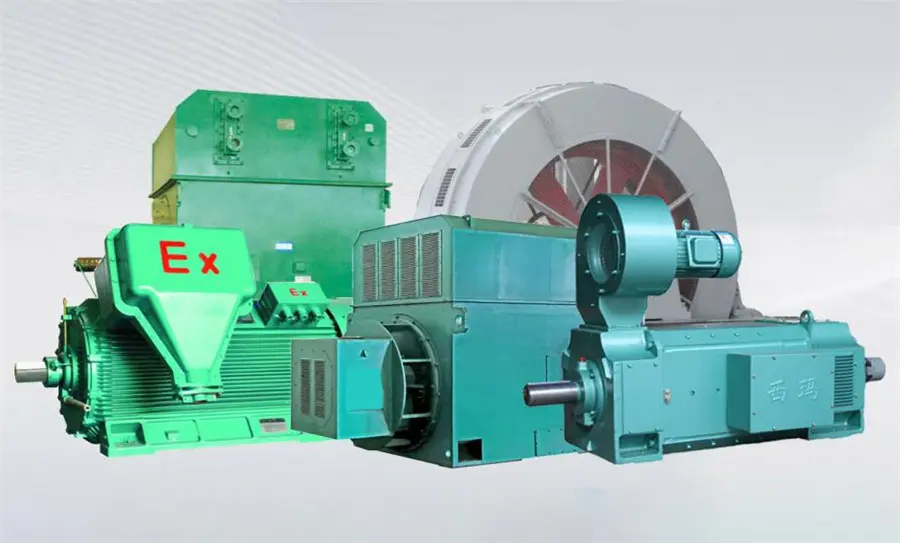
Explore our foundational range of specialized asynchronous motors designed for hazardous areas, industrial mining, and heavy-duty infrastructure applications globally.
Analyzing reactive power, localized heat generation, and global transmission efficiency in high-capacity manufacturing grids.
The power factor (PF) of an induction motor represents the ratio of active real power (kW) drawing physical work to the total apparent power (kVA) supplied by the electrical utility. Standard induction designs operate at partial loads with a degraded PF, resulting in excessive reactive currents ($kVAR$) that overload utility cabling and trigger heavy economic penalty surcharges.
By using custom stator laminations, premium high-permeability cold-rolled silicon steel, and ultra-precise air gap tolerancing (down to fractions of a millimeter), custom induction motors require lower magnetizing reactive currents. This structural optimization elevates the base motor power factor across all load thresholds.
Elevating the nominal power factor from 0.82 to 0.94 at the motor terminal limits overall current draw throughout transmission lines. This suppresses voltage drops, mitigates reactive power dissipation, minimizes conductor heating, and reduces the capital investment needed for shunt capacitor banks or active harmonic filters.
Note for Grid Administrators & Plant Managers: High-voltage systems utilizing motors upwards of 1,000 kW must target optimized mechanical slip and minimized magnetic saturation. This ensures that the motor maintains a peak power factor, directly aligning with international green initiative standards such as IE4 and IE5 premium efficiency regulations.
For multinational industrial operators in sectors like oil and gas, heavy chemical processing, metal refining, and municipal water supply, procurement metrics have shifted fundamentally. Historically, capital expenditures (CAPEX) for electric motors dictated sourcing decisions. Modern engineering paradigms prioritize Total Cost of Ownership (TCO), highlighting the vital role of operational efficiency and power factor levels.
Large-scale facilities operating hundreds of motors suffer massive voltage fluctuations and active transmission line losses if their average system power factor falls below 0.90. By collaborating directly with experienced manufacturers like SIMO to purchase custom-engineered induction motors, procurement groups achieve:
How customized induction motors are integrated into key heavy industries around the globe.
Operating in environments filled with combustible gases or vaporized solvents requires explosion-proof compliance (IECEx/ATEX). The **YBX3, YBX4, and YBX5 explosion-proof motors** prevent electrical sparking and maintain lower external frame operating temperatures under heavy structural loads.
Extremely humid, dusty, and mechanically demanding conditions define mining work. The **YBK3 Flameproof motor** is built directly inside rugged, reinforced cast steel housings, preventing internal coal dust combustion propagation while driving conveyors, mine ventilation blowers, and water pumps.
For municipal water distribution networks and farm irrigation grids, continuous-duty water pumps require high efficiency. High-voltage asynchronous lines such as the **YKS series** and the **Y series (6kV/10kV)** reduce operational power costs through highly optimized power factor curves.
A closer look at how our engineers customize motor architecture to maximize operational power factor.

Increasing the power factor of a standard squirrel-cage or wound-rotor induction motor requires minimizing the leakage reactance of both the stator and rotor coils. To achieve this, our designers refine the slots' physical geometry to ensure a uniform distribution of magnetic flux density within the core, avoiding localized saturation zones.
By sourcing non-oriented silicon steel sheets with exceptionally low core loss metrics (typically DW310 or equivalent), we reduce the magnetizing component of the excitation current. This shift elevates the active current ratio, boosting the motor's operating power factor even when running at 50% to 75% load capacity.
When pairing high-capacity induction motors with external frequency inverters (such as our **YBBP and YJP variable frequency motors**), optimizing the system's V/Hz ratio is essential. Dynamic flux adaptation algorithms built into VFD controllers ensure that the magnetic field changes dynamically to match the current torque demand, protecting the system from energy losses.
More than 60 years of technical innovation and premium manufacturing expertise in the industrial motor sector.
Originally founded as a state-owned industrial enterprise specializing in electrical machine repair and manufacturing in Xi'an, China.
Moved the primary manufacturing base to a newly built, state-of-the-art production facility within the city of Xi'an.
Following a series of strategic acquisitions and manufacturing integrations, the company cemented its position as a key electric motor supplier in northern China.
Transitioned from a state-owned facility to a modern limited liability company, introducing international quality control frameworks.
Established a group structure with 14 specialized subsidiaries, scaling production of high-voltage and flameproof motor lines.
Relocated to a modern facility equipped with advanced vacuum pressure impregnation (VPI) equipment and high-speed CNC balancing machines.
Rebranded to reflect our international presence. Today, SIMO continues to lead the industry in delivering IE4, IE5, high-voltage, and explosion-proof motors worldwide.
Today, SIMO stands as a leading industrial motor manufacturer, specializing in large/medium-sized, high/low voltage AC motors, DC motors, synchronous motors, and highly specialized explosion-proof motors. The company's registered capital is 21.5 million RMB, with three modern manufacturing factories, one subsidiary facility, and fixed assets totaling over 380 million RMB.
Equipped with over 1,172 sets of advanced manufacturing and testing devices, our workforce of over 1,200 employees includes 260 technical engineers, 21 senior engineers, and 15 expert engineering advisors. We cover 34 major product series, containing more than 1,800 varieties and over 19,500 individual specifications, with power ratings ranging from 0.35 kW up to 25,000 kW.
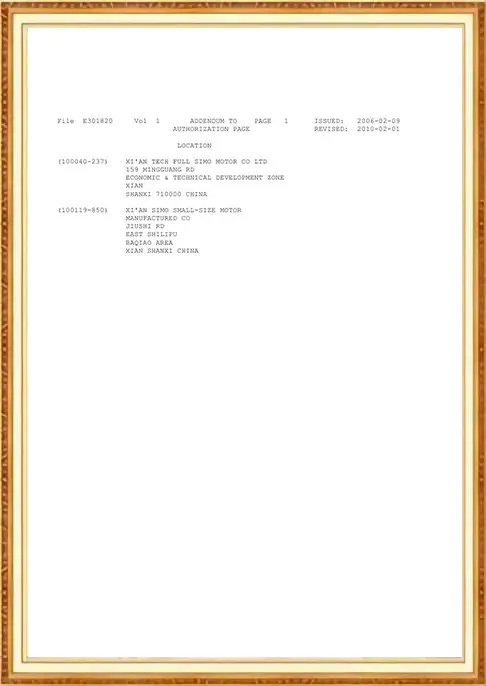
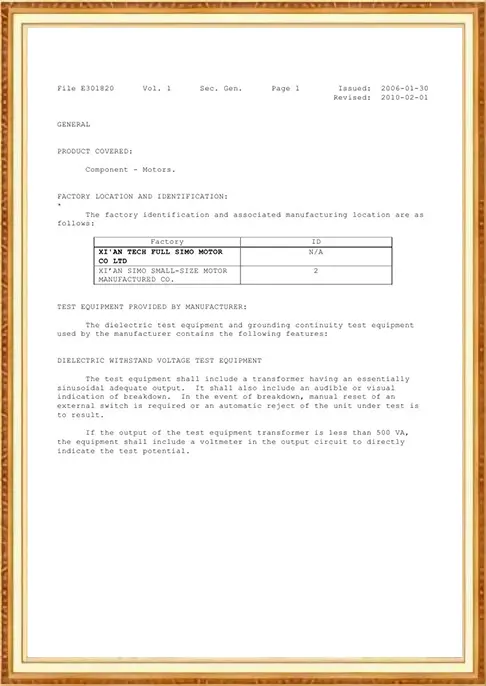
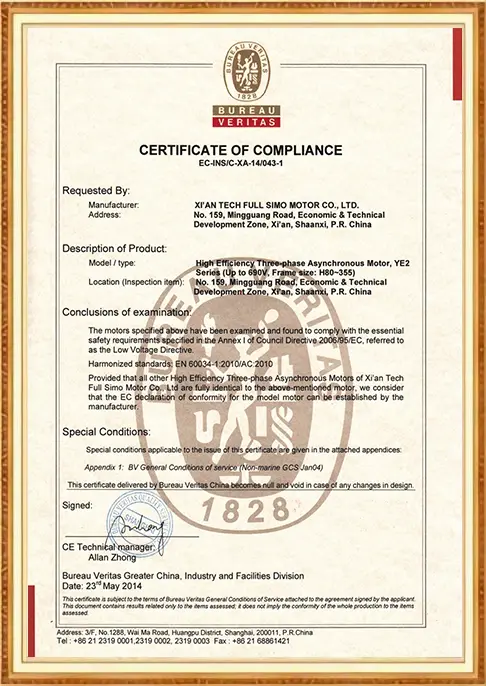
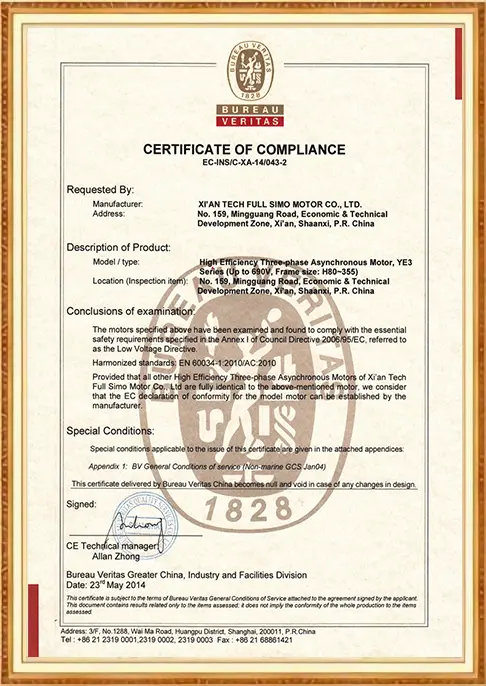
To support overseas projects and local installations, SIMO has obtained rigorous international certifications, demonstrating our commitment to quality, reliability, and safe operation in challenging environments:
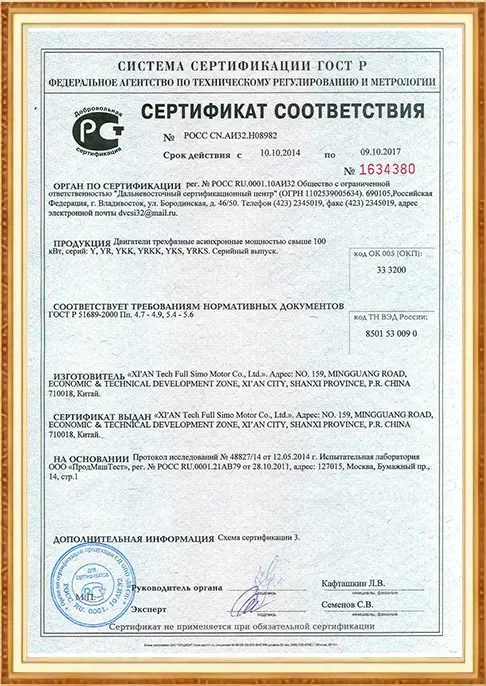
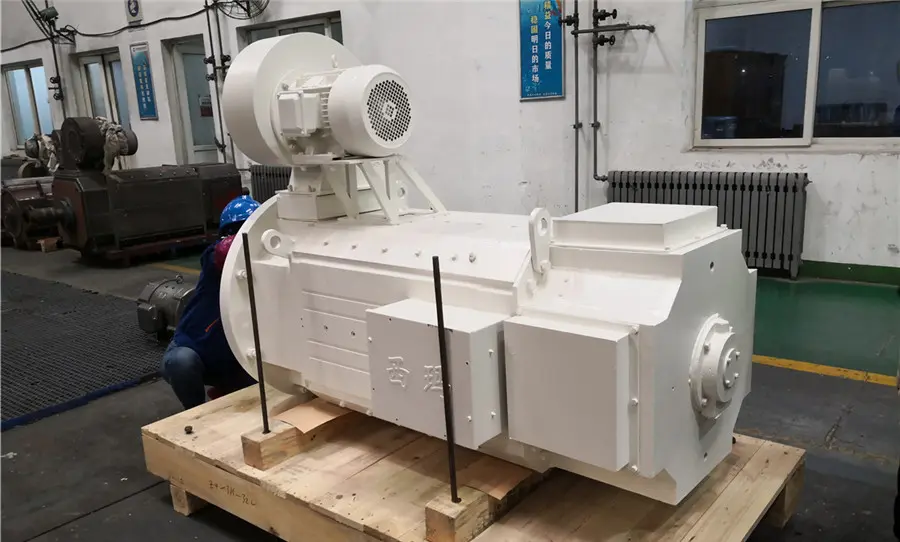
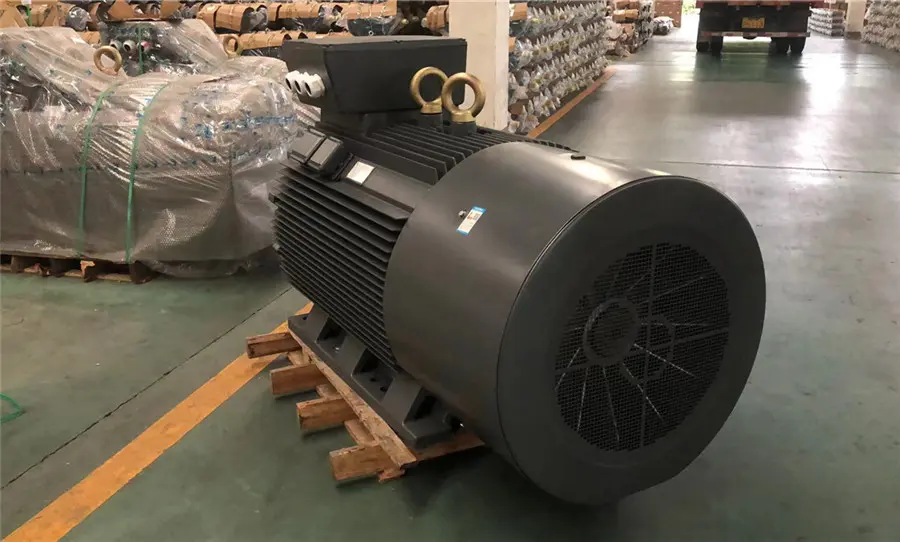
Precision manufacturing guarantees stable performance, consistent electrical properties, and high power factor efficiency.
Get answers to common technical questions about optimizing power factor, installation safety, and selecting the right motor.
Browse our advanced line of custom asynchronous, wound-rotor, variable speed, and medium-to-large scale industrial DC motors.
 Lite Simo