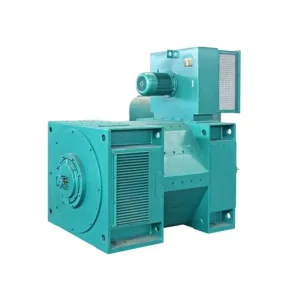
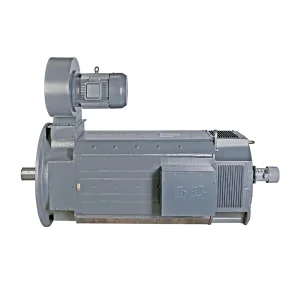
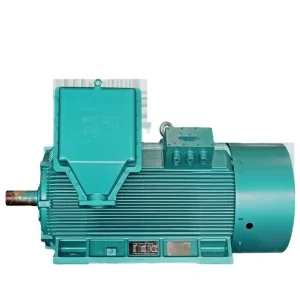
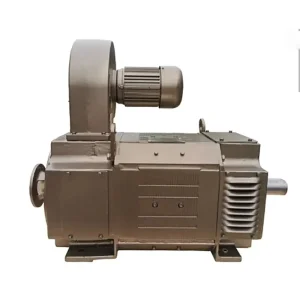
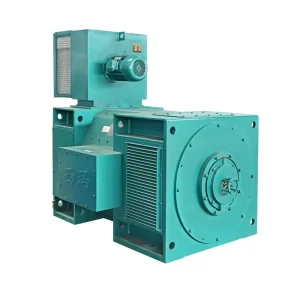
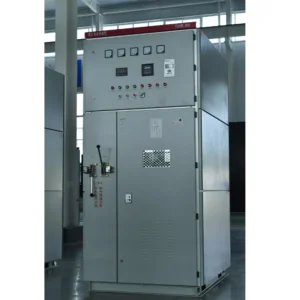
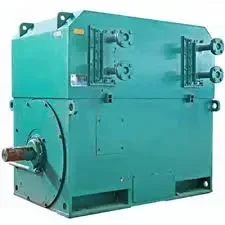
Explore our foundational range of heavy-duty induction, explosion-proof, and custom-designed motor systems.
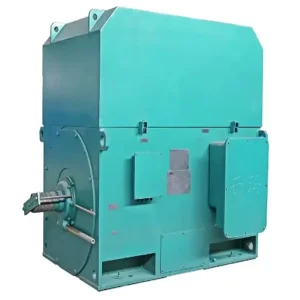
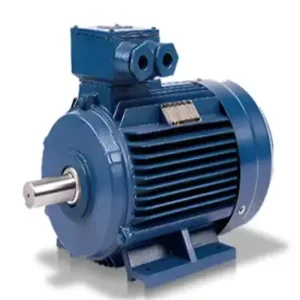
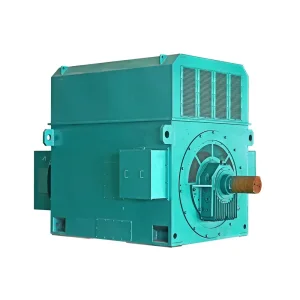
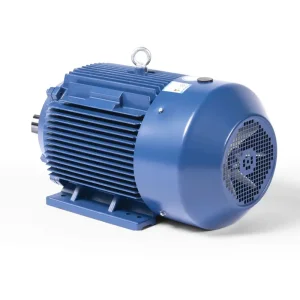
An in-depth look at thermal regulation, industrial deployment, and high-voltage power transmission efficiency.
The term IC611 refers to a specific cooling methodology defined under the international IEC 60034-6 standard. It represents a closed-circuit system featuring an air-to-air heat exchanger. The primary internal air circulation is driven by an internal fan mounted directly onto the motor shaft, transferring thermal energy generated by the stator windings and rotor core to the inner walls of the heat exchanger tubes. Simultaneously, a shaft-driven external fan pushes cool ambient air through these tubes, dissipating the heat safely into the atmosphere.
This design creates a completely sealed environment (typically IP54 or IP55), ensuring the vital electrical components within the motor housing are isolated from external hazards. IC611 is highly valued in harsh processing industries because it offers an ideal balance between superior environmental protection and reliable continuous cooling performance without requiring external water sources.

By separating the internal air loop from the environment, contaminants such as coal dust, silica, saline moisture, and chemical vapors are prevented from settling on the high-voltage insulation material.
Unlike water-jacketed motors (IC81W), IC611 systems rely solely on ambient air circulation. This removes the risk of water supply failure, scale deposits, or freezing pipes in sub-zero locations.
Maintaining a stable, uniform temperature gradient across the motor frame limits local thermal hotspots, reducing stress on Class F/H insulation and extending service intervals.
Leveraging over six decades of engineering history to supply heavy-duty industrial electric motors globally.
Originally established in 1955 as a state-owned industrial plant, Xi’an Lite SIMO Motor Co., Ltd. has evolved into a premier manufacturer of large, medium-sized, high/low voltage AC/DC motors, synchronous machines, and explosion-proof motors. Ranking at the top of China's mechanical industry, SIMO manages design, casting, machining, insulation processing, assembly, and rigorous testing under one roof. With fixed assets exceeding 380 million RMB and operating 1,172 sets of advanced equipment, SIMO supplies heavy industrial systems worldwide.
A history of industrial motor innovation, restructuring, and expansion from a state-owned facility to a global supplier.
SIMO Motor was established as a state-managed engineering factory to support the country's early industrial development.
Relocated production to a larger, dedicated plant in Xi'an to scale up manufacturing capacity for large electric machines.
Rebranded as Xi'an Motor Factory after acquiring and integrating several regional components and casting manufacturers.
Restructured from a state-owned plant into a modern limited liability company, introducing agile management and market-driven R&D.
Established SIMO Motor Group, expanding corporate reach through 14 subsidiaries specializing in different motor components.
Relocated to a modern high-tech industrial park, installing automated machining centers and advanced VPI vacuum pressure impregnation lines.
Renamed to Tech Full Simo Motor, aligning corporate strategy with international standards (CE, UL, GOST, ISO).
Expanding global supply partnerships with international EPC companies, exporting heavy high-voltage motor products to over 40 countries.
Analyzing localized application needs, production advantages, and technical integration trends.
Modern heavy industries face strict targets to improve operational efficiency, lower carbon emissions, and reduce unplanned downtime. Under these conditions, the demand for high-voltage motors using IC611 cooling has increased significantly. Major processing sites—ranging from dry-process cement plants in South Asia to deep mining operations in South America—depend on high-voltage motors to drive heavy equipment like grinding mills, ventilation fans, and water transport pumps.
Because the IC611 cooling configuration provides excellent protection against dust and water (typically IP55 rating) and operates independently of an external water line, it is highly suitable for remote, arid, or dusty environments. Industry procurement managers increasingly prioritize motors that offer balanced thermal performance, reliable bearing structures, and high-grade insulation to handle electrical stress and voltage fluctuations.
China has developed a highly integrated supply chain for manufacturing heavy machinery and electric motors. Factories like SIMO benefit from this infrastructure, which includes access to high-grade silicon steel sheet laminations, precision copper wire drawing facilities, and advanced casting foundries. This local ecosystem reduces lead times and lowers manufacturing costs without compromising quality.
Furthermore, Chinese manufacturers have heavily adopted automated manufacturing technologies, including:
High-voltage motors with IC611 cooling are designed for a variety of critical industrial applications, including:
| Cooling Code (IEC) | Cooling Medium (Internal / External) | Protection Rating (Typical) | Best Use Cases | Main Maintenance Needs |
|---|---|---|---|---|
| IC611 | Air / Air (Closed Circuit with Exchanger) | IP54 or IP55 | Dusty, dry, or remote industrial sites (e.g., mines, cement mills, outdoor pump stations) | Periodic cleaning of external heat exchanger tubes to prevent blockages |
| IC01 | Air / Air (Open Circuit, Self-Ventilation) | IP23 | Clean, indoor environments with controlled ambient air temperature | Frequent replacement of air filters; cleaning of internal winding dust |
| IC411 | Air / Air (Surface Fan Cooled) | IP55 | Low to medium power motors (frame sizes below 450mm) | Inspection of external frame fins; ensuring clear airflow pathways |
| IC81W | Air / Water (Closed Circuit with Exchanger) | IP55 | Very high power motors; tight spaces with limited ambient air cooling | Water quality monitoring; leak detection; scale removal in tubes |
Our manufacturing and quality assurance workflows comply with major international testing standards.
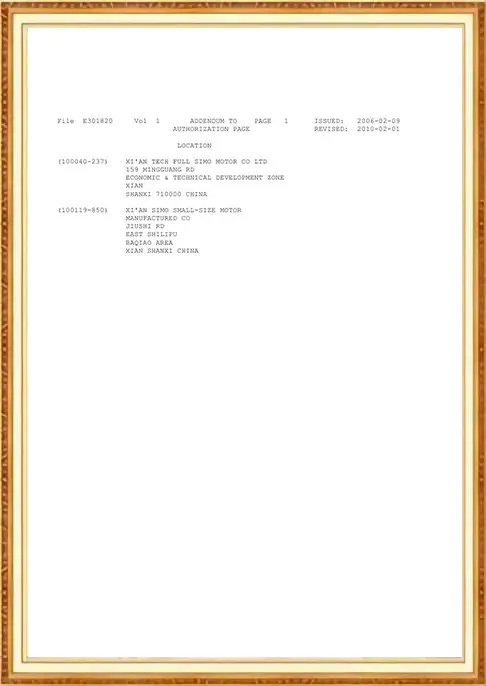
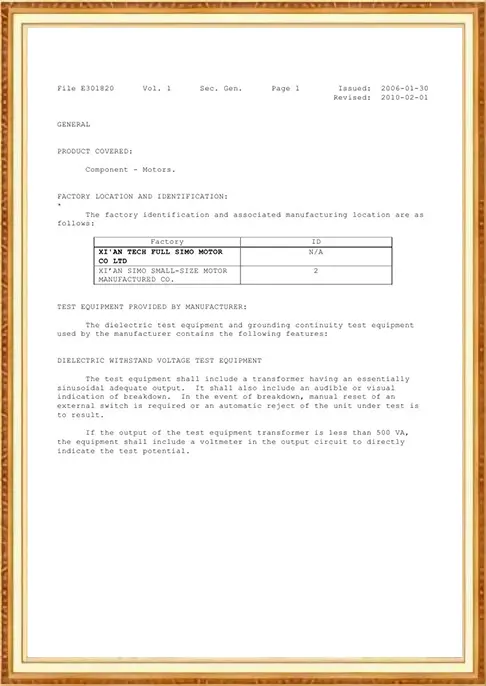
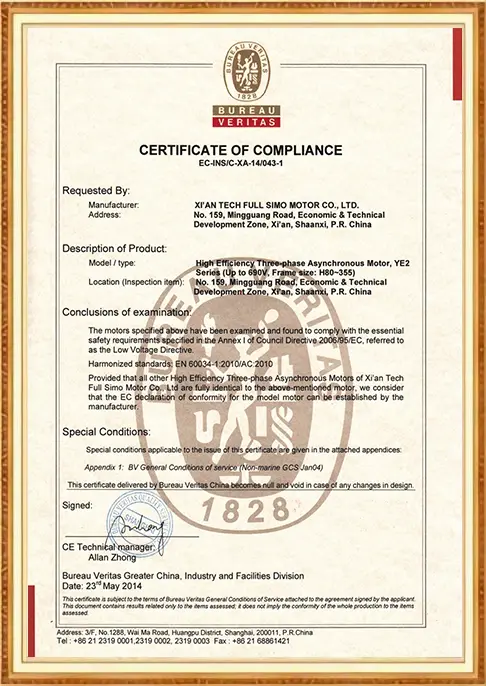
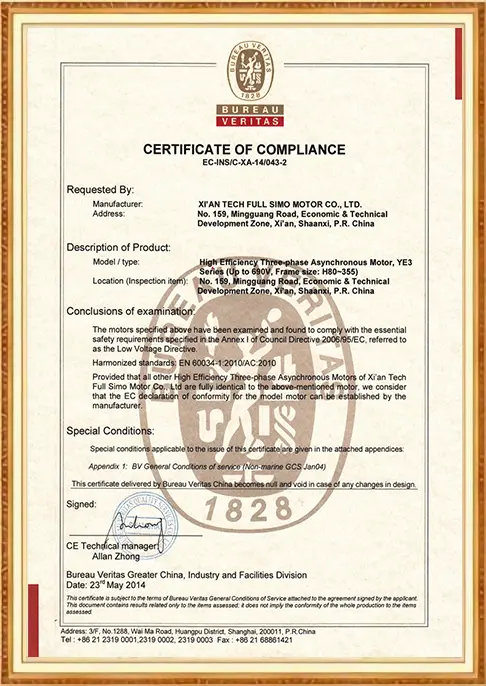
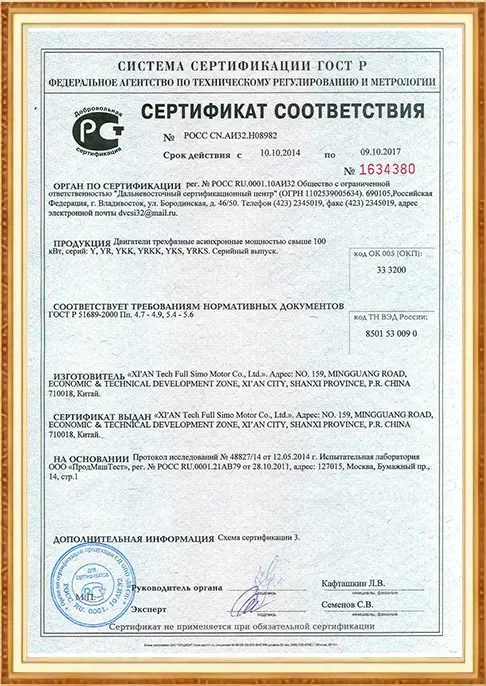
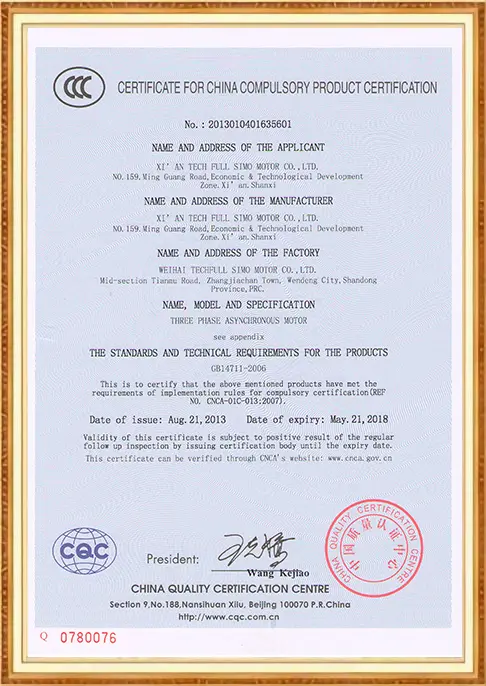
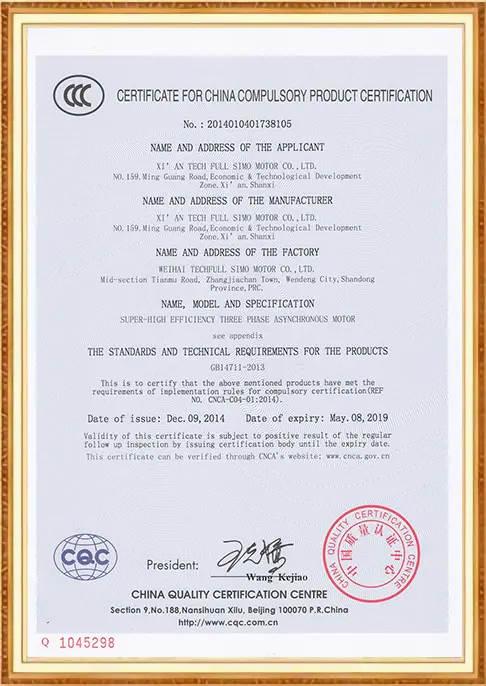
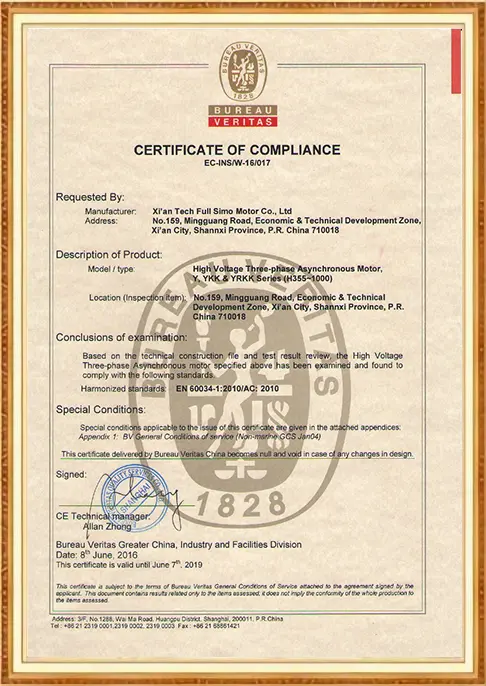
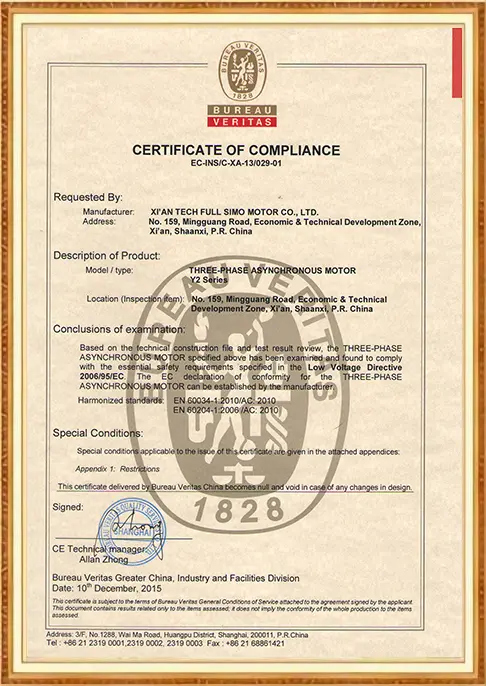
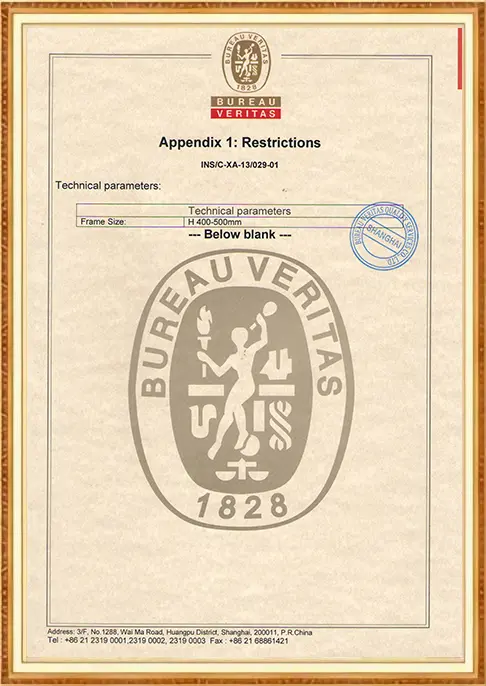
SIMO Motor maintains full compliance with the ISO9001:2015 Quality Management System, European Union CE, United States UL, Russian GOST, and China's national explosion-proof certifications. This ensures our high-voltage motors meet safety and performance standards globally.
Understanding efficiency regulations, variable frequency integration, and predictive maintenance.
Globally, energy regulations are changing to require higher minimum efficiency standards for electric motors. Industrial facilities are moving away from older, less efficient systems and adopting IE4 and IE5 efficiency classes (such as our YE4 and YE5 series motors). Because high-voltage motors run continuously in heavy-duty applications, even a 1% increase in electrical efficiency can lead to significant cost savings over the machine's lifespan.
Developing high-efficiency motors with IC611 cooling requires optimized design of the electrical steel laminations, high fill-factor stator winding layout, and efficient fan design to reduce cooling loss while maintaining stable temperatures.
Modern process automation relies heavily on variable frequency speed regulation. Incorporating variable frequency regulation (such as with the YJP and YBBP series motors) allows operators to match motor output directly to real-time process demand, reducing energy consumption during low-load periods.
Additionally, modern plants are adopting predictive maintenance strategies. Incorporating vibration sensors, bearing temperature detectors (RTDs), and thermal sensors directly into the IC611 cooling loop allows operators to monitor motor health remotely, identify issues before failure, and schedule maintenance to avoid costly unplanned shutdowns.
Get answers to common technical, maintenance, and procurement questions regarding IC611 high-voltage systems.
IC611 motors use a dedicated air-to-air heat exchanger with a dual-fan arrangement (internal and external air circuits). This design is suitable for high-voltage, large frame sizes (typically 355mm and above) because it provides more effective heat dissipation than standard fin cooling. IC411 relies on cooling fins cast directly into the outer motor frame, which becomes less efficient at larger sizes due to the lower surface area-to-volume ratio.
In highly dusty environments, such as cement plants, coal mines, or steel mills, particulate matter can accumulate inside the heat exchanger tubes. This buildup acts as thermal insulation, reducing the rate of heat exchange and causing the motor's operating temperature to rise. Regular inspection and cleaning of the cooling tubes using compressed air or water flushes are recommended to maintain heat transfer efficiency.
Yes, but special care must be taken. At very low operating speeds, shaft-driven fans generate less airflow, which reduces cooling performance. If the motor needs to operate continuously at low speeds under full load, we can configure it with an independent electric blow fan (separate cooling circuit) and apply insulated bearings or shaft grounding brushes to protect the motor from high-frequency shaft currents generated by the VFD.
Our high-voltage motors are built with Class F insulation as standard, with designs rated for Class B temperature rise limits. This approach provides a safety margin, helping to protect the winding insulation during temporary overloads or high ambient temperature conditions.
Yes, we design and manufacture motors to meet specific project needs. We support various voltages (including 3kV, 6kV, 10kV, and 11kV at 50Hz or 60Hz) and can customize shaft extensions, mounting dimensions, terminal box locations, and monitoring configurations to simplify retrofitting into existing plants.
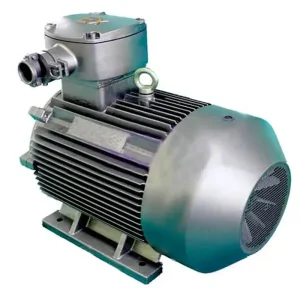
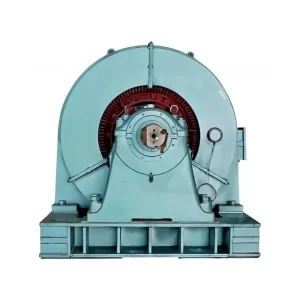
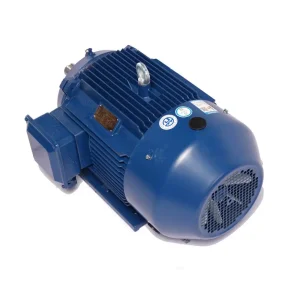
Explore our explosion-proof, synchronous, and high-efficiency low-voltage motor ranges for specific applications.
 Lite Simo