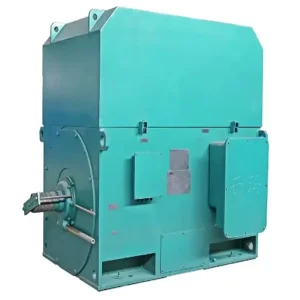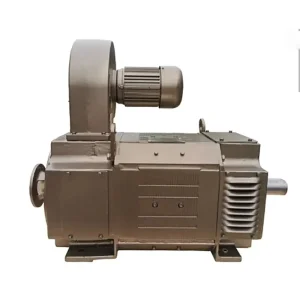
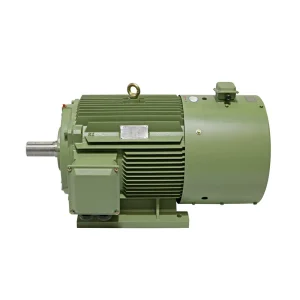
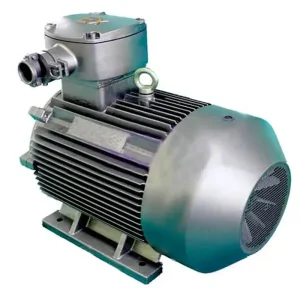
An in-depth whitepaper exploration of stator pole configuration, torque density, and mechanical transmission loss elimination.
In modern industrial motion control, the demand for high-torque, low-speed drive systems has undergone a profound shift. Traditional mechanical speed-reduction setups (using standard high-speed 2-pole or 4-pole motors coupled to complex gearboxes) suffer from inherent parasitic energy losses, oil leakage hazards, backlash errors, and high maintenance overheads. A Low RPM 3 Phase Motor addresses these engineering bottlenecks by shifting the speed reduction from mechanical components to the internal electromagnetic circuit.
By increasing the internal number of magnetic stator poles (from 6, 8, 10 up to 24 or more), the motor's synchronous speed decreases according to the formula ns = 120f / P (where f is the electrical frequency and P is the pole count). This allows the system to generate tremendous starting and running torque directly at the shaft, reducing or completely eliminating the need for an intermediate gearbox. This direct-drive structure significantly reduces rotational inertia, increases overall efficiency, and extends the operational lifetime of mechanical bearings.
Furthermore, managing high current density in a dense pole slot environment requires premium class-H insulation, advanced stator coil winding configurations, and optimized rotor bar geomatries. These design aspects ensure that the thermal dissipation remains balanced, even when operating at very low frequencies under heavy mechanical loads.

A heritage of precision manufacturing, certified industrial capacity, and global supply chain reliability since 1955.
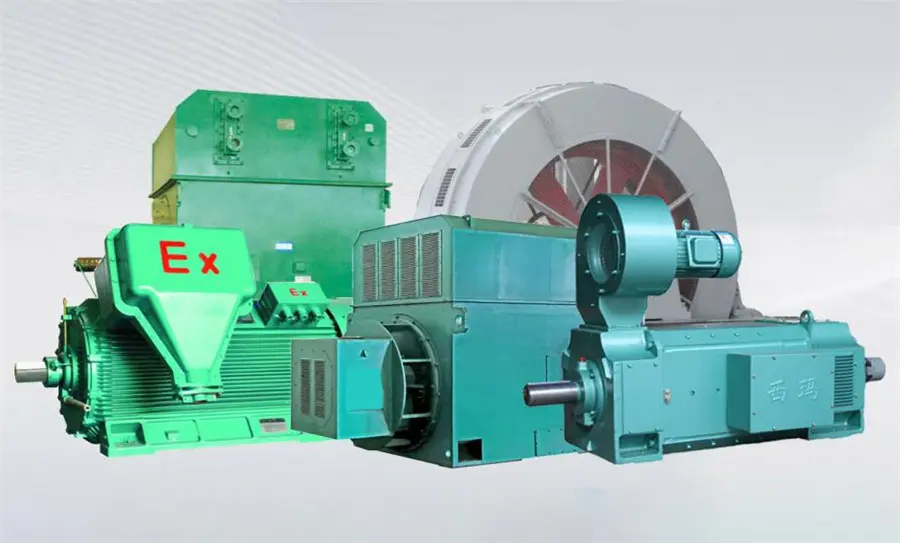
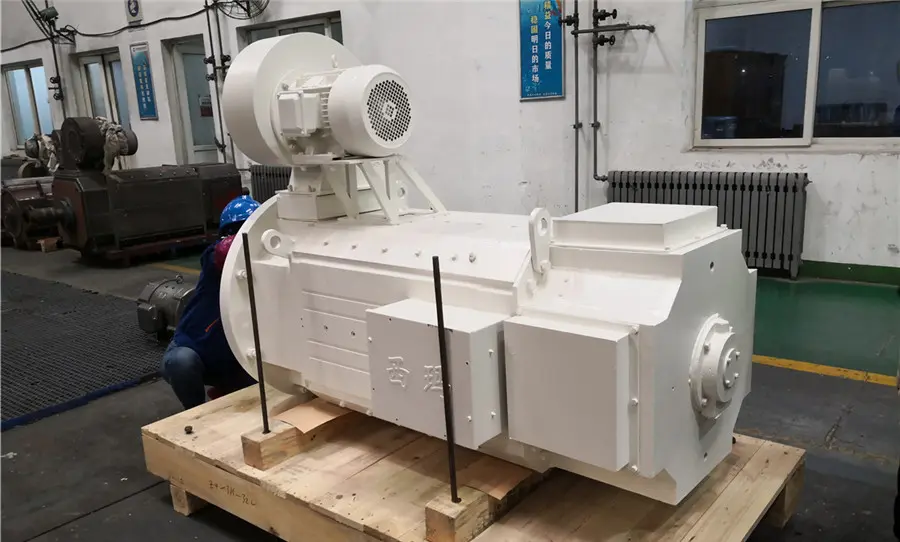
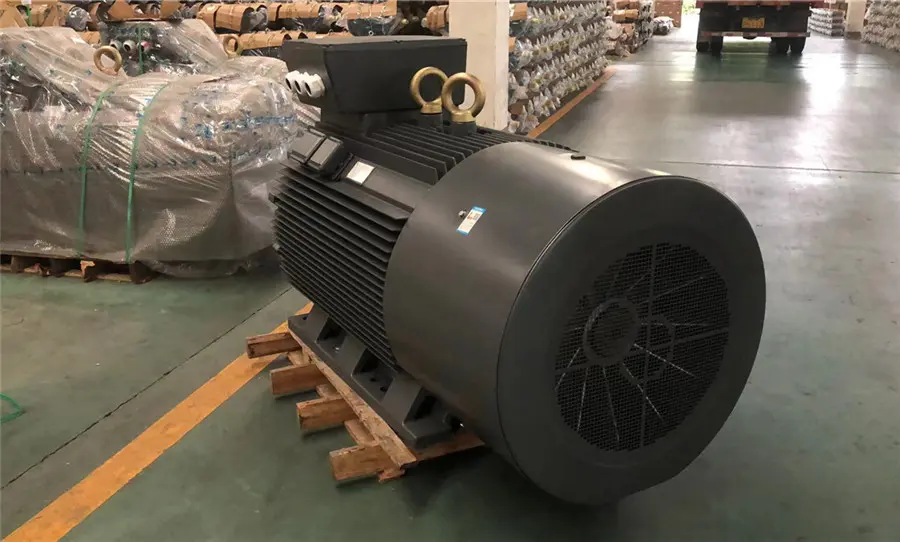
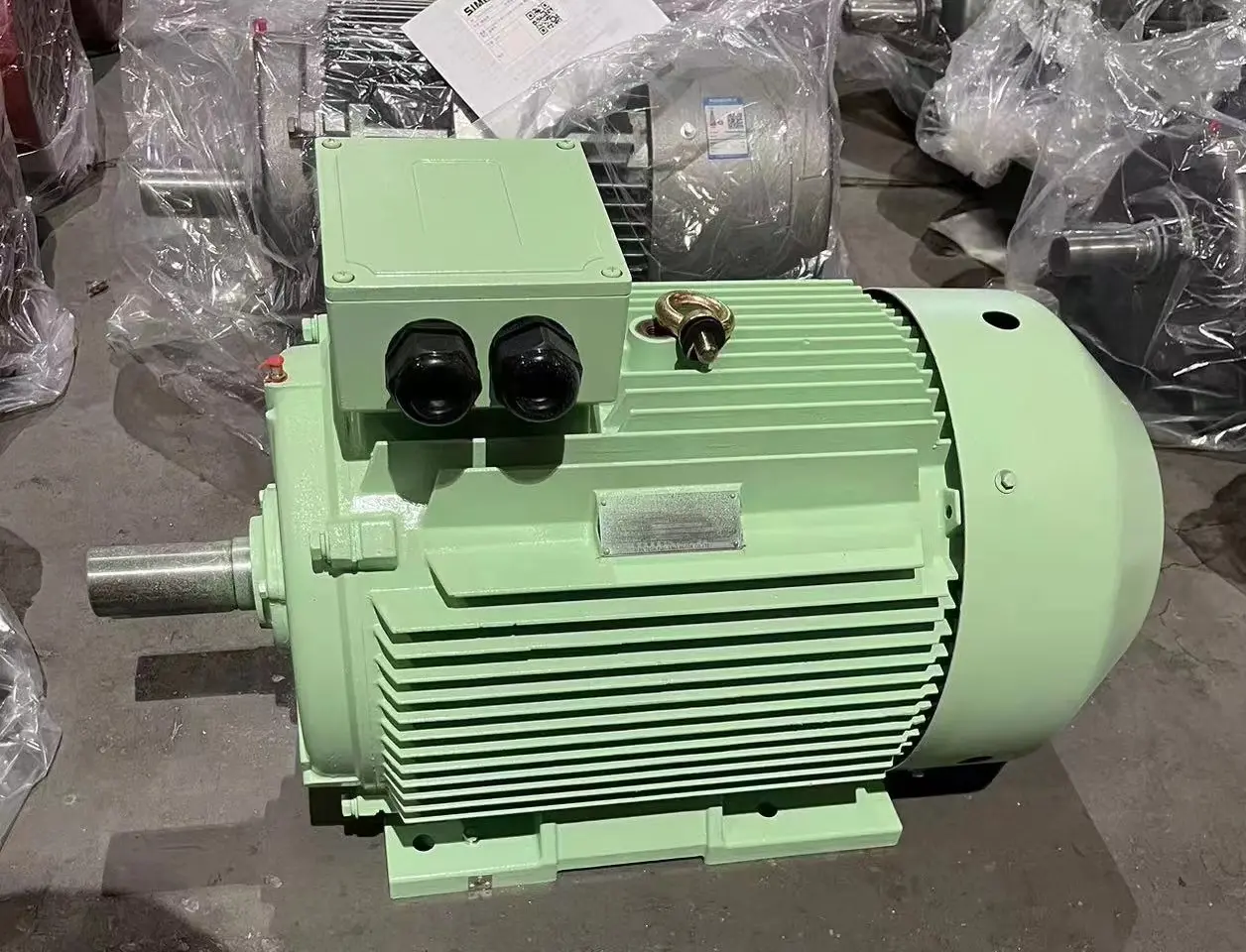
Originally established in 1955 under state leadership, Xi’an Lite SIMO Motor Co., Ltd has evolved into a premier enterprise specializing in large, medium-sized, high/low voltage AC motors, DC motors, synchronous motors, and explosion-proof electric motors. With a registered capital of 21.5 million RMB and total assets exceeding 380 million RMB, SIMO operates three large-scale manufacturing facilities and one specialized subsidiary factory, covering every phase of motor engineering, mold fabrication, assembly, and testing.
Our workforce features more than 1,200 employees, including a core team of over 260 technical engineers, 21 senior engineers, and 15 expert engineers who lead national-level drive optimization projects. The facility houses 1,172 sets of advanced equipment, enabling the production of 34 major series of motors across 1,800 varieties and 19,500 specifications. SIMO's power range covers everything from 0.35kW up to 25,000kW, positioning us at the very top of China's heavy industrial electric motor landscape.
Why procurement officers, plant managers, and EPC contractors globally prioritize direct-drive asynchronous and synchronous solutions.
Procuring a high-quality low RPM motor might involve higher initial capital expenditure than a high-speed motor and gearbox package. However, when factoring in the costs of gear oil replacement, mechanical wear, unplanned downtime, and energy losses (typically 2-4% per gear stage), a direct-drive low RPM motor provides return on investment within 18 to 24 months.
In locations like remote mining facilities, underground coal mines, offshore oil rigs, or massive municipal water pumps, access for maintenance is difficult and costly. Eliminating the gearbox means removing the primary point of mechanical failure. SIMO's heavy-duty double-shielded bearings and VPI insulation reduce bearing wear and grease degradation.
Governments in Europe, North America, and East Asia enforce strict efficiency mandates (such as IE3, IE4, and the new IE5 standards). Because SIMO's premium efficiency motors (such as the YE5 series) minimize rotor and copper slip losses, they help heavy industrial plants comply with carbon limits and qualify for energy-saving subsidies.
Engineered motor series designed to withstand extreme thermal, physical, and environmental challenges across global heavy industries.
Large sag mills, ball mills, and rotary crushers require continuous torque at low speeds under severe start-up conditions. High starting torque prevents the grinding media from slipping and causing system blockages.
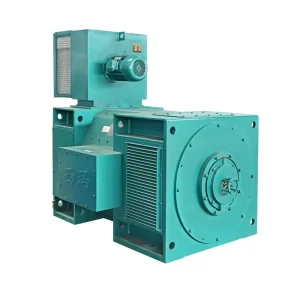
SIMO Recommended Series: TDMK series motor AC three-phase synchronous motors are engineered for mine milling, featuring high torque, robust overload capacity, and specialized excitation systems to maintain system stability under load swings.
Petrochemical plants, underground coal mines, and grain storage facilities contain explosive gases, volatile chemical vapors, or fine dust particles. Electric motors operating in these zones must prevent internal sparks from escaping.
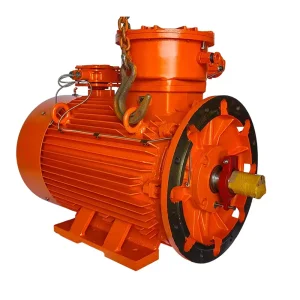
SIMO Recommended Series: The YBX3, YBX4, and YBX5 series flameproof low-voltage high-efficiency motors, alongside the YFB3 and YFB4 series dust explosion-proof three-phase asynchronous motors, provide flameproof enclosure protection designed for hazardous environments.
Water treatment plants, steel cooling towers, and heavy chemical aeration systems require continuous adjustment of motor speed to match flow fluctuations without wasting electricity.
SIMO Recommended Series: YVFE3, YVFE4, and YVFE5 series variable frequency speed-regulating motors allow wide-range frequency control, keeping operation stable even at low RPM under continuous load.
For power plants, municipal water pumping stations, and large district heating pipelines, stepping up the motor voltage reduces transmission currents and copper line losses.
SIMO Recommended Series: YKK, YKS, and Y2 series high voltage three-phase induction motors (operating at 6kV and 10kV) are designed for large municipal and utility grid systems.
A strategic look into material science, insulation systems, thermal management, and smart factory integration.
By optimizing the stator slot geometries, using high-permeability cold-rolled silicon steel laminations, and decreasing stator copper resistance, SIMO's IE5-compliant induction motors lower core excitation losses, helping operators prepare for future energy efficiency regulations.
Modern VFDs use high carrier frequencies (IGBT switching), which can generate common-mode voltage and high-frequency bearing currents, leading to electrical discharge machining (EDM) damage. SIMO's future low-RPM motors include insulated bearings and shaft grounding brushes as standard configuration.
Integrating temperature sensors (PT100, PTC thermistors) directly into winding slots and bearing housings allows for real-time monitoring. When connected to industrial control systems, these sensors provide early warning of thermal or vibration anomalies, helping prevent unplanned shutdowns.
SIMO electric motors are manufactured under strict QA protocols, meeting international standards for deployment worldwide.
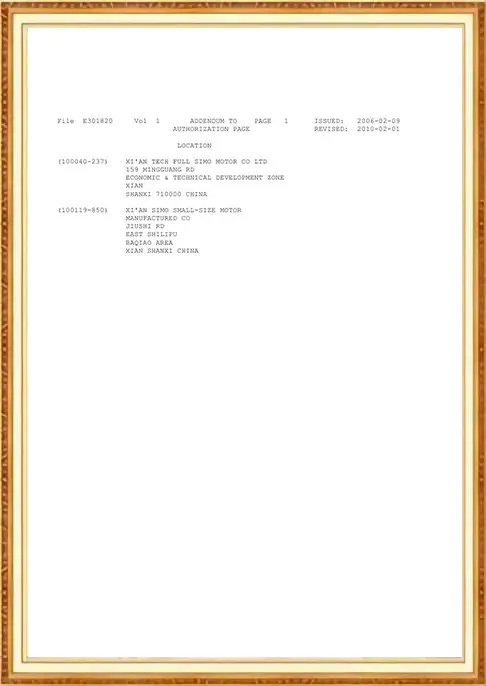
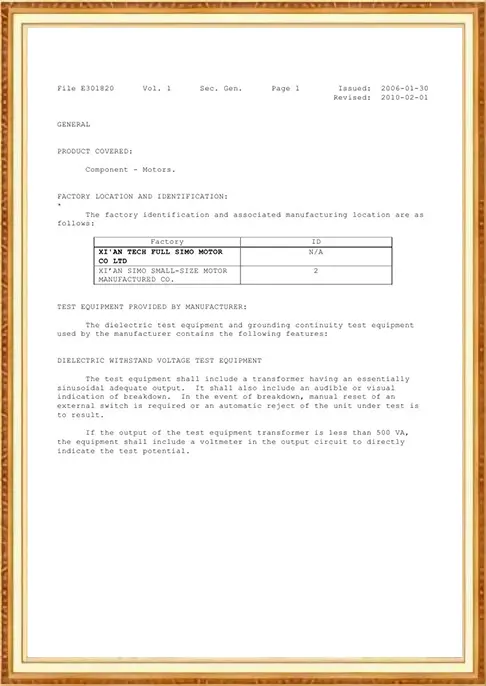
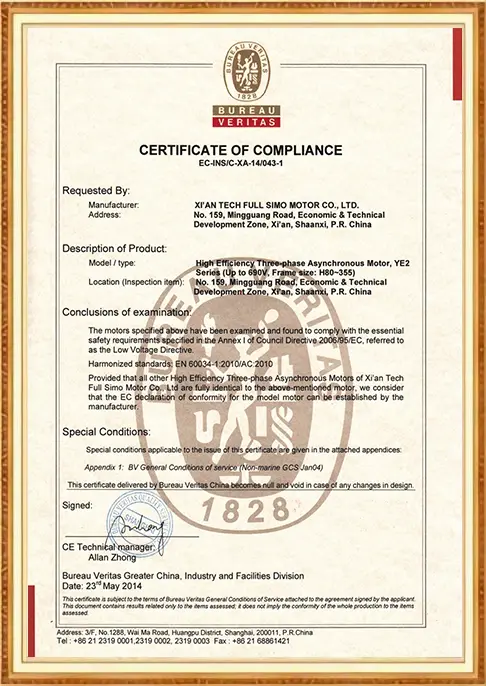
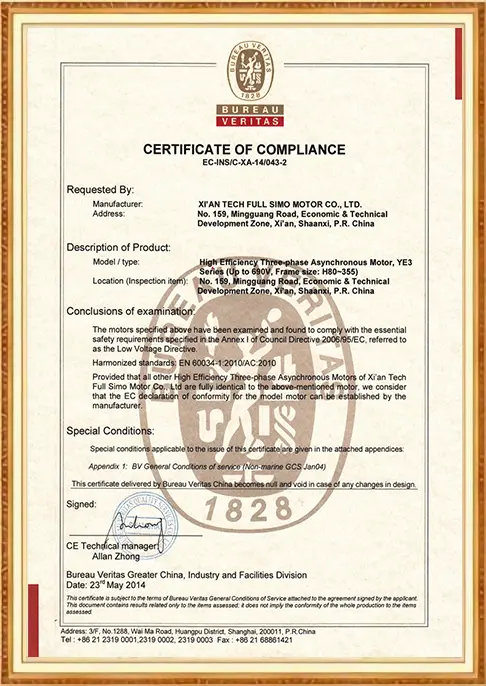
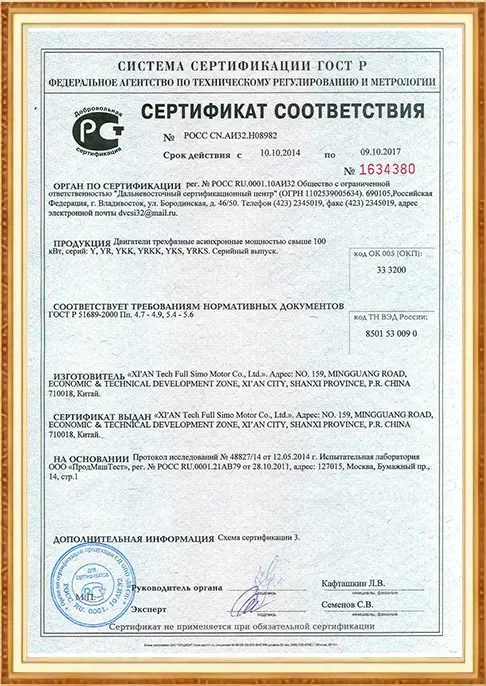
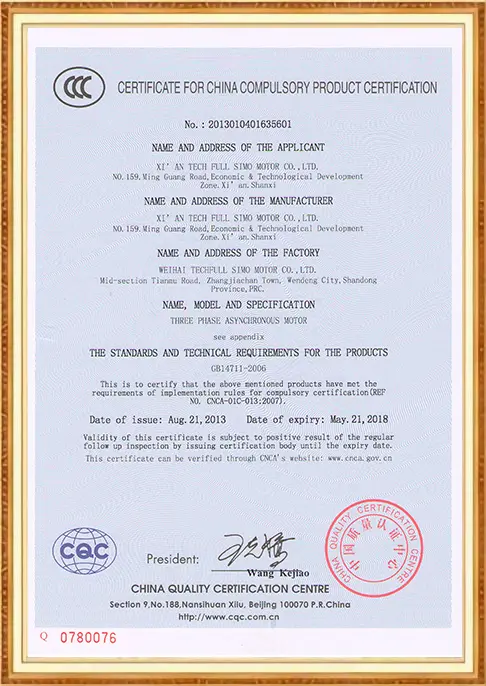
To supply critical systems across EU, Eurasian, and North American markets, our manufacturing plants maintain strict compliance with global testing programs. SIMO has successfully passed the ISO9001 Quality System Certification, European CE Mark compliance, United States UL standards, and Russian GOST-R certification.
Every low RPM three-phase induction motor undergoes rigorous tests, including no-load verification, temperature rise assessment, vibration testing, and high-potential dielectric testing. This quality process ensures reliable operation in critical applications, from offshore marine propulsion to high-pressure mining mills.
Addressing the technical, installation, and operation questions raised by electrical engineers and system integrators.
Low RPM motors are built with a high number of magnetic poles (e.g., 8, 10, 12, or more) and larger frame sizes. This design increases the stator's magnetic volume and cooling surface area, allowing high torque to be generated through magnetic force rather than high currents. In addition, the use of Class H insulation and advanced thermal designs prevents heat build-up under high load conditions.
A direct-drive low RPM motor is preferred when high reliability, low maintenance, and energy efficiency are priorities, or when operating in remote locations. Eliminating the gearbox removes a common mechanical failure point, reduces energy losses, and cuts maintenance costs, making it ideal for mining, municipal water, and hazardous environments.
Variable Frequency Drives (VFDs) generate high-frequency voltage pulses that can cause electrical stresses and bearing currents. To prevent damage, VFD-driven low RPM motors should use insulated bearings (such as hybrid ceramic bearings) and high-quality winding insulation systems that can withstand voltage spikes.
The pole count determines the synchronous speed according to the formula: Speed = 120 * Frequency / Poles. Increasing the pole count reduces the rotational speed but increases the motor's physical size and torque capacity, allowing it to handle heavy loads directly at lower speeds.
IE5 efficiency motors reduce energy losses by up to 20% compared to IE4 models. They utilize advanced slot geometry and high-grade core materials to minimize losses, helping industrial operations meet strict emissions standards and reduce energy costs.
SIMO uses high-precision dynamic balancing for all rotors and rigid cast-iron frames to minimize vibration. Advanced electromagnetic design also helps reduce harmonic forces, ensuring quiet and stable operation even under high-torque conditions.
 Lite Simo