Why Choose a Double Squirrel Cage Motor for Industry?

Time:2026-11-01 Author:Oliver
0%

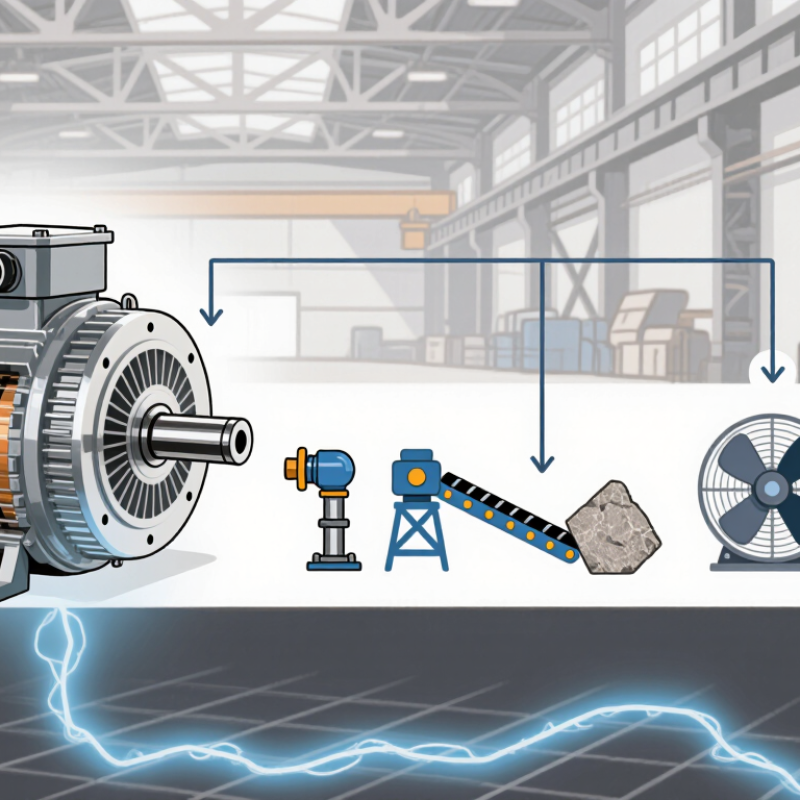
Industrial motors quietly drive pumps, compressors, crushers, conveyors, and large fans. Their energy impact is substantial. The International Energy Agency estimates that electric motor systems consume about 45% of global electricity. This figure makes motor selection an operational decision, not merely a purchasing detail. For demanding machinery, the Double Squirrel Cage Motor offers a practical balance between starting performance and running efficiency.

Its rotor uses two cage circuits with different electrical characteristics. The outer cage provides higher resistance during startup, producing strong torque when a loaded machine begins moving. As speed rises, current shifts toward the inner cage, which has lower resistance and supports more efficient operation. This behavior can reduce severe starting stress on couplings, belts, and gearboxes. It also helps limit voltage dips in facilities with restricted electrical capacity. Picture a stone crusher beginning under load, rather than spinning freely in an empty workshop.

Industry guidance supports this engineering logic. IEC 60034-30-1 establishes efficiency classes for line-operated AC motors, helping buyers compare performance consistently. The U.S. Department of Energy also identifies motor-driven equipment as a major industrial energy consumer. Yet the choice is not automatic. A Double Squirrel Cage Motor may involve higher purchase costs, more complex maintenance, and less flexibility than a modern variable-frequency drive. Real site data should decide. Starting frequency, load inertia, duty cycle, supply capacity, and maintenance skills all matter. Sometimes, the traditional solution is not the best one. Careful analysis prevents an impressive specification from becoming an expensive mistake.
Why Choose a Double Squirrel Cage Motor for Industry?

What a Double Squirrel Cage Motor Is

A double squirrel cage motor is an induction motor with two conductive cage circuits built into its rotor. Each cage consists of bars joined by end rings, forming closed paths for induced current. The rotor has no external brushes or mechanical switch between the cages. Both are part of one fixed assembly.

The outer cage is designed with relatively high electrical resistance, while the inner cage has lower resistance. At startup, the rotor’s electrical frequency is high, so current tends to favor the outer cage. This helps the motor develop strong starting torque. As the rotor speeds up, its electrical frequency falls, and more current flows through the lower-resistance inner cage. That supports efficient operation near normal running speed. The change happens through the motor’s electrical behavior, not through a moving part. That detail matters.

This construction can suit machinery that needs firm starting torque, such as loaded conveyors or pumps. It is not a universal upgrade. Starting conditions, load, duty cycle, and supply characteristics still matter. I would not judge a motor by the word “double” alone. The design can also involve trade-offs in cost and rotor complexity, and actual performance depends on how the cages are engineered. A motor’s nameplate and application data deserve a close look.

How the Two Cages Influence Starting and Running Performance

A double squirrel cage motor uses two rotor cages to handle different parts of its operating cycle. The outer cage typically has higher resistance, while the inner cage has lower resistance. At startup, rotor current frequency is high, so more current flows through the outer cage. This helps produce strong starting torque without relying on a single low-resistance cage. It can be useful when a loaded conveyor or pump needs a firm push from rest. The motor still draws substantial starting current; the design does not make that disappear.

Once the rotor approaches operating speed, slip and rotor frequency fall. Current then shifts toward the inner, lower-resistance cage, which supports efficient running and reduces rotor losses. That change is the practical advantage: one cage assists acceleration, the other favors steady operation. But it is not magic. Cage geometry, load inertia, and the driven machine all affect results, so catalog torque figures should be checked against the actual duty cycle. In a plant, a motor that starts a fan well may behave differently on a heavily loaded crusher. Selection sometimes involves trade-offs, and field measurements can reveal details that a neat specification sheet misses.

Industrial Applications That Benefit from Its Design

A double squirrel cage motor is useful where a machine must start under load, not merely spin freely. Its outer cage has higher resistance, helping produce strong starting torque while moderating starting current. As speed rises, current shifts toward the inner, lower-resistance cage, supporting efficient operation at normal speed. This design can suit loaded conveyors, crushers, mixers, and some reciprocating compressors. A belt may need to move before its hopper is empty. A crusher may face a packed restart. Those moments matter.

Industrial plants may also use these motors on equipment that cycles between stops and demanding starts, when the motor and power supply are properly matched. The design does not remove the effects of heavy loads or frequent starts. Starting frequency, load inertia, voltage drop, and cooling still require careful checks. Details matter. A lightly loaded fan may gain little, while a high-inertia machine can overheat if starts occur too close together. Selection is not always tidy: the same motor may suit one conveyor and perform poorly on another. Compare the driven load’s torque needs with the motor’s starting performance, then check protection and thermal limits against actual operating conditions.

Why Choose a Double Squirrel Cage Motor for Industry? — Industrial Applications That Benefit from Its Design
Industrial Application Typical Starting Condition How the Double-Cage Design Helps Practical Selection Note
Loaded belt conveyors May need to start with material on the belt, creating substantial breakaway torque. The outer, higher-resistance cage supports stronger starting torque; as speed rises, the inner, lower-resistance cage carries more of the running current. Check belt tension, material load, starting frequency, and the supply system’s permissible voltage drop.
Jaw and other heavy-duty crushers Can present high starting torque and significant mechanical inertia, especially if the machine is not started empty. The high-resistance outer cage improves starting characteristics, while the lower-resistance inner cage is suited to normal running operation. Confirm the crusher’s start-under-load requirements and follow the driven-equipment manufacturer’s starting procedure.
Reciprocating compressors Starting torque can be high if the compressor starts against pressure or its unloading system is ineffective. The outer cage can provide useful starting torque during acceleration, helping the motor start demanding loads. Use the specified unloader or pressure-relief arrangement where required; verify starting current and acceleration time.
Industrial mixers and agitators Viscous, settled, or partly solid contents can create high breakaway torque. The motor’s starting characteristics can help accelerate the mixer through a difficult initial load before efficient running conditions are reached. Assess product viscosity, vessel contents at startup, shaft inertia, and whether variable-speed control is needed.
Bucket elevators Starting with material in the buckets can require high torque and reliable acceleration. The double-cage rotor design is suited to applications where robust starting torque is important and the motor then runs at a relatively steady speed. Consider backstop requirements, loaded-start conditions, duty cycle, and the elevator manufacturer’s torque specifications.
Heavy-duty rotary kilns and similar process drives Large rotating mass and process resistance can make acceleration demanding. The outer cage contributes to starting torque; the inner cage provides the lower-resistance path that predominates as the motor approaches operating speed. Check the complete drive-train inertia, required acceleration time, thermal limits, and any need for auxiliary starting equipment.
Centrifugal pumps Often start with relatively modest torque when correctly installed, though system conditions can vary. A double-cage motor may be useful where the pump or process requires stronger starting torque, but the design is not automatically necessary for every pump. Compare the pump’s torque-speed curve with the motor’s starting performance; consider a standard motor where starting torque demands are low.
General-purpose constant-speed machinery Application has a demanding start but runs at a nearly constant speed after acceleration. The two-cage rotor combines higher-resistance starting behavior with lower-resistance running behavior in a single induction-motor design. Compare purchase cost, efficiency, starting current, duty cycle, and available alternatives such as soft starters or variable-frequency drives.

Advantages and Trade-Offs Compared with Other Motor Types

A double squirrel-cage induction motor uses two rotor cages with different electrical characteristics. At startup, current concentrates in the outer, higher-resistance cage, helping produce strong starting torque. As the rotor accelerates, the inner, lower-resistance cage carries more of the current. Useful for loaded starts. Think conveyors or crushers, not just unloaded fans.

Compared with a single-cage motor, this design can provide better starting performance without relying on external rotor resistors. A wound-rotor motor, however, allows more direct control of starting torque, though slip rings and brushes add maintenance.

Double-cage motors do not provide variable speed by themselves; a drive is needed for that. Their rotor design can also add cost, and the fit is not automatic. Check the real load curve, not only the nameplate.

The U.S. Department of Energy’s 2014 Improving Motor and Drive System Performance: A Sourcebook for Industry estimates that motor-driven systems account for about 68% of U.S. manufacturing electricity use. That figure describes motor systems collectively, not savings from double-cage designs. For a specific duty, compare starting current, acceleration time, rated-load efficiency, and expected starts per hour. A motor that starts a heavy load well may still be a poor choice if it runs inefficiently for most of its service life.

Key Factors for Selecting and Maintaining the Motor

Why Choose a Double Squirrel Cage Motor for Industry?

A double squirrel cage motor can be a strong choice when machinery needs high starting torque but must run efficiently under normal load. Its outer cage supports starting, while the inner cage carries more of the running current once speed rises. This design suits loaded conveyors, compressors, and some crushers. But the motor must match the actual load.

Check the full torque-speed curve, driven-equipment inertia, supply voltage, starts per hour, and required acceleration time. A motor that starts a conveyor gently may struggle with a heavily loaded crusher.

The U.S. Department of Energy’s Improving Motor and Drive System Performance: A Sourcebook for Industry reports that motor-driven systems use about 69% of U.S. industrial electricity. That makes correct sizing and efficient operation worth careful attention. Don’t size by horsepower alone.

Maintenance should include bearing checks, vibration readings, cooling-path inspections, and phase-current comparisons. Record readings under similar load conditions; trends often reveal trouble earlier than a single measurement. Keep the cooling fins clear of dust and confirm that the starter and protection settings suit the motor’s starting duty.

Small details matter. I would not trust a nameplate alone: site conditions and load cycles can change the decision. Even a sound selection can disappoint when starts are frequent or ventilation is poor.

FAQS

What is a double squirrel cage motor?

It has two rotor cages with different electrical resistance. Each supports a different part of the motor’s operation.

How do the two cages help during startup and normal running?

The higher-resistance outer cage helps create strong starting torque. As speed rises, current shifts toward the lower-resistance inner cage. That supports efficient running.

Does this design eliminate high starting current?

No. The motor can still draw substantial current when starting. Check that the supply and starter suit the starting duty.

What equipment may suit this motor?

It can suit loaded conveyors, compressors, and some crushers. A conveyor starting gently is not the same as a heavily loaded crusher. Load matters.

What should be checked before selecting a motor?

Review the torque-speed curve, equipment inertia, supply voltage, starts per hour, and acceleration time. Horsepower alone is not enough.

What maintenance details are useful?

Check bearings, vibration, cooling paths, and phase currents. Keep cooling fins clear of dust. Compare readings under similar loads.

Why might real-world performance differ from the specification sheet?

Cage geometry, load cycles, and ventilation can affect results. Field readings may reveal issues a catalog does not show. I would not rely on one figure alone.

Can one motor choice work equally well for every load?

Not always. A motor that handles one machine well may struggle with another. The actual duty cycle deserves a closer look.

Conclusion

A Double Squirrel Cage Motor is an induction motor designed with two rotor cages to balance strong starting torque with efficient operation once it reaches speed. The outer cage, with higher resistance, helps produce the torque needed to start demanding loads, while the inner cage, with lower resistance, supports smoother, more efficient running. This design can suit industrial equipment that starts under load, such as compressors, conveyors, pumps, and similar machinery.

Compared with simpler motor designs, a double-cage motor can reduce the need for complex starting arrangements, but it may involve higher cost and requires careful matching to the application. When selecting one, consider load characteristics, starting frequency, supply conditions, required speed, and operating environment. Regular inspection of bearings, ventilation, electrical connections, and insulation helps maintain dependable performance and extend service life.


Oliver

Oliver

Oliver is a seasoned marketing professional with a wealth of expertise in driving brand awareness and engagement. With a deep understanding of our company's product offerings, he consistently delivers high-quality content that enriches our professional blog. His insights not only shed light on......