Choosing a Cast Iron Motor begins with the application, not the motor catalog. A heavy frame may suggest strength, but it does not guarantee the right performance. The motor must match the load, duty cycle, speed, voltage, environment, and installation method. A pump running continuously needs different protection from a conveyor starting under heavy load. Small details matter. Dust can settle around cooling fins. Moisture can enter through an overlooked cable gland. Heat can shorten bearing life before failure becomes visible.
Austin Hughes, a respected author on electric motors and drives, states, “The motor is only one part of the drive system.” That principle deserves attention. A Cast Iron Motor should work with the entire machine, including the starter, inverter, coupling, gearbox, and protection devices. Engineers should check starting torque, service factor, efficiency class, insulation rating, and bearing arrangements. They should also confirm whether the enclosure suits washdown areas, outdoor exposure, or corrosive dust.
Experience can challenge assumptions. A larger motor is not always safer. It may operate inefficiently under light loads and create unnecessary inrush current. A cheaper model may also become expensive after repeated bearing replacements. This guide examines practical selection decisions, from frame material and thermal behavior to maintenance access and lifecycle cost. The process is not perfectly predictable. Real sites contain vibration, temperature changes, and installation errors. Careful selection reduces those risks, but it never removes the need for inspection and honest reconsideration.
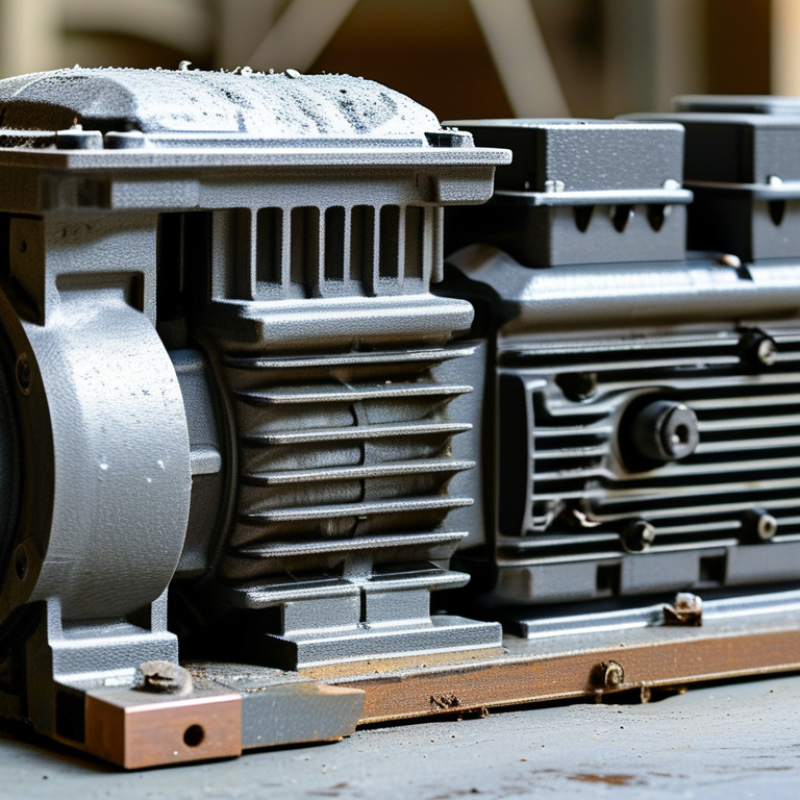
How to Choose a Cast Iron Motor for Your Application?
Define the application’s power, speed, and operating requirements before comparing motor frames. A cast iron motor suits demanding environments, including pumps, compressors, conveyors, and machine tools. Start with the load’s actual power demand, not only its nameplate rating. Check starting torque, running torque, duty cycle, and expected overloads. Motor speed must match the driven equipment. A mismatch can create heat, vibration, or unnecessary energy use. The U.S. Department of Energy’s Motor Systems Market Assessment found that motor systems use about 68% of industrial electricity in the United States. Efficient sizing matters. It affects both operating cost and reliability.
Tips: Record the load profile for a full production cycle. Measure peak current if possible. Confirm voltage, frequency, enclosure rating, ambient temperature, and installation altitude. For variable-speed operation, verify inverter compatibility and cooling performance. A cast iron housing offers strong mechanical protection, but it does not solve poor ventilation or misalignment. The International Energy Agency reported that electric motor systems consume more than 40% of global electricity. Small selection errors can scale into major losses.
In field practice, a larger motor is not automatically safer. Oversizing may reduce efficiency and weaken power-factor performance at light loads. I have seen specifications focus heavily on horsepower while ignoring frequent starts and short operating cycles. That approach looks tidy, but it can fail in service. Review bearing loads, shaft orientation, maintenance access, and condensation risks. Leave room for doubt. Real operating data is often less perfect than the design sheet.
| Application Type | Typical Power Range | Recommended Rated Speed | Typical Duty | Recommended Enclosure | Operating Requirements | Selection Notes |
|---|---|---|---|---|---|---|
| Belt Conveyor | 5.5–30 kW | 1,450–1,480 rpm at 50 Hz 4-pole motor |
S1 continuous duty | Totally enclosed fan-cooled | High starting torque, frequent starts, dusty surroundings, and possible material overloads | Verify belt pull, acceleration time, gearbox ratio, and allowable starting current before final sizing. |
| Centrifugal Pump | 2.2–75 kW | 2,850–2,980 rpm at 50 Hz 2-pole motor |
S1 continuous duty | Totally enclosed fan-cooled | Stable load, high efficiency, protection from moisture, and compatibility with variable-speed operation | Match motor speed to the pump curve; check flow, head, liquid density, and minimum speed limits. |
| Axial or Centrifugal Fan | 1.1–45 kW | 960–1,480 rpm at 50 Hz 4- or 6-pole motor |
S1 continuous duty | Totally enclosed fan-cooled | Low starting torque, long running hours, low vibration, and possible high ambient temperature | Avoid oversizing; fan power rises rapidly with speed, so speed control can reduce energy consumption. |
| Air Compressor | 7.5–90 kW | 1,450–2,980 rpm at 50 Hz 2- or 4-pole motor |
S1 continuous or intermittent heavy duty | Totally enclosed fan-cooled | High starting torque, repeated starts, pressure cycling, and elevated mechanical load | Consider unloaded starting, motor thermal capacity, starting frequency, and the compressor’s torque curve. |
| Industrial Mixer | 4–55 kW | 720–1,480 rpm at 50 Hz 4-, 6-, or 8-pole motor |
S1 or S4 intermittent duty | Totally enclosed fan-cooled | Variable viscosity, shock loads, reversing cycles, and possible product contamination | Use a service factor only when justified; evaluate peak torque rather than average operating power alone. |
| Crusher or Heavy-Duty Mill | 30–160 kW | 720–1,480 rpm at 50 Hz 4-, 6-, or 8-pole motor |
S1 continuous duty | Totally enclosed fan-cooled with reinforced mechanical construction | Very high starting torque, shock loads, vibration, dust, and possible blocked-rotor events | Confirm starting method, short-circuit withstand, shaft loading, coupling limits, and protection settings. |
| Machine Tool or Workshop Equipment | 0.75–22 kW | 1,450–2,980 rpm at 50 Hz 2- or 4-pole motor |
S1, S3, or S6 duty | Totally enclosed fan-cooled | Frequent starts and stops, accurate speed requirements, low vibration, and clean indoor conditions | Check braking requirements, inertia, acceleration time, shaft extension, and variable-frequency-drive compatibility. |
Cast iron frames resist impact, heat, and vibration. They suit pumps, fans, conveyors, and other heavy-duty equipment. Still, the enclosure rating matters more than appearance.
Single-phase motors suit smaller equipment with accessible power supplies. Three-phase motors usually provide smoother torque and better efficiency. Check the available supply first.
Measure the actual load, required speed, torque, and starting conditions. Do not select by horsepower alone. Oversizing is not always safer. An oversized motor may run lightly loaded and waste energy.
Foot-mounted motors suit pump, fan, and conveyor bases. C-face motors attach directly to driven equipment. Flange-mounted motors support compact arrangements. Vertical mounting needs proper thrust handling and drainage. Measure twice.
Poor mechanical fit can create noise, heat, vibration, and early bearing wear. Measure shaft height, shaft size, and bolt spacing before ordering. Electrical compatibility is not enough.
Open airflow designs suit clean, dry areas only. Totally enclosed designs better resist dust and moisture. Washdown or high-exposure areas may need specialized protection. Do not judge protection by sight.
Match the motor nameplate with the available voltage, phase, and frequency. A voltage mismatch can increase current, reduce torque, and shorten motor life. Check the supply carefully.
Compare purchase price, electricity use, lubrication, inspections, downtime, and replacement labor. Higher efficiency may reduce costs during long operating hours. Review efficiency at the actual load. Catalog figures can mislead.
Confirm alignment before tightening bolts. Use suitable grounding, overload protection, cable sizing, and ventilation clearance. Record current, temperature, and vibration readings during startup. Initial calculations may be imperfect. That deserves a second review.
Choosing the right Cast Iron Motor begins with a clear understanding of the application’s power demand, operating speed, duty cycle, and working conditions. Start by comparing available motor types, mounting configurations, and enclosure ratings to ensure the design matches the equipment and provides suitable protection. The correct motor size should be selected according to the required load, voltage, phase, starting method, and desired efficiency class, avoiding both undersizing and unnecessary oversizing.
Environmental factors are equally important. Consider temperature, humidity, dust, chemicals, ventilation, cooling requirements, bearing design, and expected maintenance access before making a final decision. A reliable selection should also comply with applicable installation standards and integrate properly with the driven equipment. Finally, evaluate long-term operating costs, including energy consumption, maintenance, replacement parts, downtime, and service life. A carefully matched Cast Iron Motor can improve durability, efficiency, operational stability, and overall value throughout the equipment’s working life.

 Lite Simo